

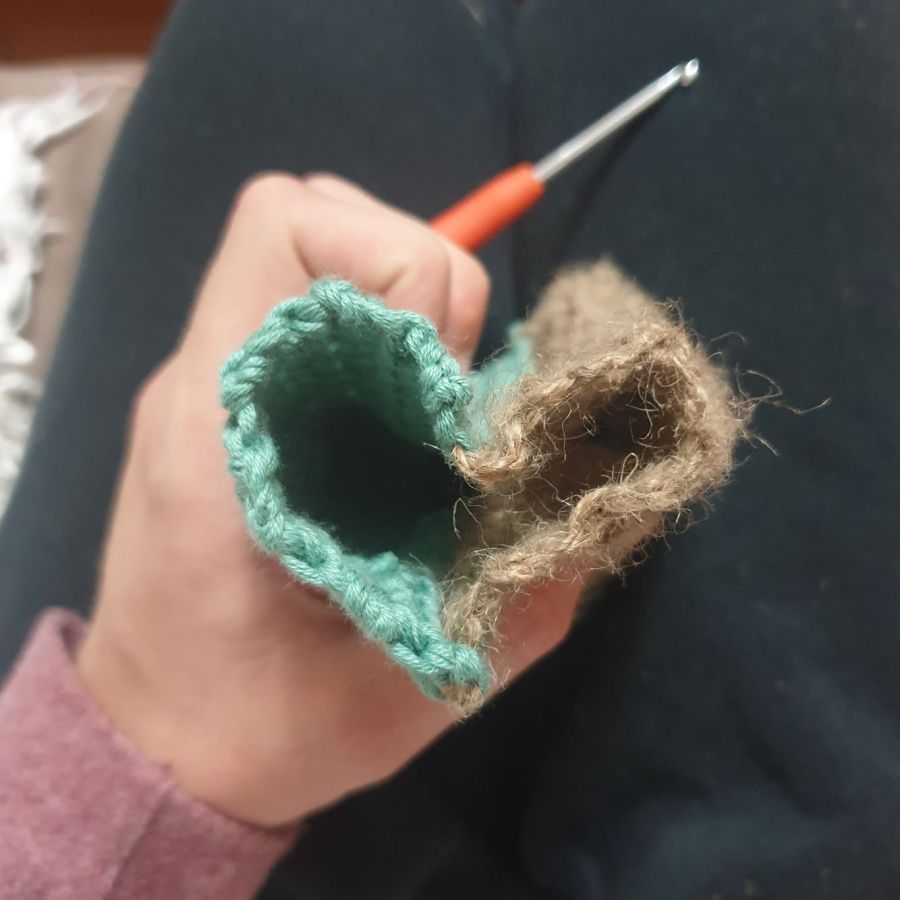
Now that we have learned the mindful skill of crochet we can make our own custom items. You can get creative and design your own clothes, toys, household items, art… imagine all of the possibilities.
Imagine a waste-free home…
Or at least a reduced waste home. A home without plastic in the cleaning cupboard! All of the microfibre cleaning cloths and sponges you have used to clean your home have been creating plastic waste and contributing to landfil. Thankfully there are so many amazing alternatives that are even more effective at cleaning. It’s so easy to make the switch to something better for you and the environment.
Just remember when you’re buying yarn for crochet and knitting, all of the synthetic fibres out there are creating microplastics that enter our environment and our bodies. I like to stick to cotton and hemp yarn when I’m making items for cleaning. I designed this scrubber sponge pattern so that one side is made from hemp yarn for extra scouring power and the other side is made of cotton for regular wiping and scrubbing.
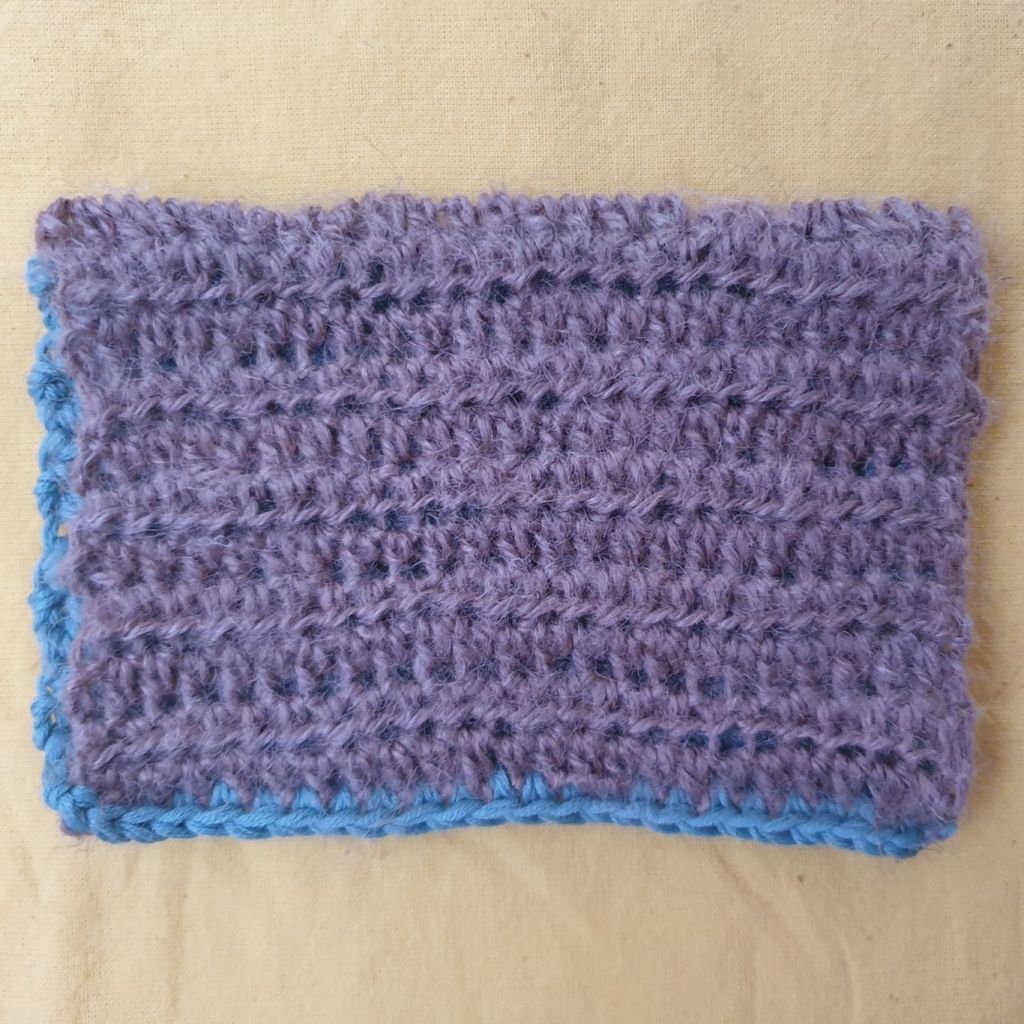

Detour: Here is my video explaining the trouble with microplastics https://youtu.be/Uspk3LOrfjY
I’ve called this deisgn a multipurpose scrubber sponge because it’s useful for cleaning in any room of the house, not just the kitchen. Keep one of these in your bathroom and laundry too. You’ll be reaching for it to clean every surface in your home.
This is my first time writing a pattern for other people to use so please let me know if there are any mistakes!
The Pattern: Hemp and Cotton Scrubber Sponge
- Materials:
- 4 mm crochet hook
- 8 ply yarn in cotton
- Hemp yarn (or similar textured fibre like nettle yarn). This link has some examples of the yarn I would use in this pattern: https://stringharvest.com.au/collections/natural-edit
- Patern notes:
- This pattern is written in US Crochet terms.
- Begin with a foundation chain and make the sponge as long as you like. You can keep adding rows to make the sponge wider. I found this size works best for my small lady hands but you might prefer an oversized style sponge.
- Abbreviations:
- Ch: Chain
- Sc: Single crochet
- Hdc: Half double crochet
- Pattern:
- With hemp yarn Ch 25
- Row 1: Hdc in the 3rd chain from the hook. Hdc all the way along.
- Rows 2 – 12: Ch 2 for the turning chain. Hdc to the end of the row.
- Attach cotton yarn and cut off the hemp yarn.
- Row 12: Sc along the long edge of the hemp rectangle.
- Rows 13 – 24: Hdc to the end of the row. Don’t bind off yet!
- Finishing: Still with your cotton sitting at the end of Row 24, fold the 2 halves of the sponge together and Sc along the other long edge to join the 2 halves. You will be crocheting into both of the stitches on each edge so they are now “sewn” together.
- I leave the short sides open so that the air flows through the sponge for easy drying.
- You can sew or crochet up the short sides if you desire.
Let me know in the comments if you try out this pattern. Tell us what you think!
You can purchase one of these scrubbers at my Storenvy store and check out my other crochet creations for sale.

 The Full Cup Wellness