Environmentally friendly leather?

Click here to hear me read this post on my podcast

Have you heard of the term vegan leather? Sometimes it’s called pleather or plastic leather and is made from polyurethane (PU). More recently some new types of materials have been created to mimic the durability of leather without using plastic or harmful chemicals in the manufacturing process. I had a look into some of these new plastic-free alternatives and compared them with leather and pleather by weighing up the pros and cons.

Leather

I’m including real animal hide in this list as a comparison against the leather imitation materials out there.

Pros: Durable. Natural resource.

Cons: Non-vegan product as it involves animal cruelty. Modern tanning and dyeing chemicals are toxic to humans and the environment.

Pleather

Fabric coated with plastics to imitate leather.

Pros: No animal cruelty. Waterproof. Cheap to make.

Cons: Contributes to plastic waste in landfill and microplastic pollution in our environment. Created from harmful petrochemicals. Fossil fuels used to make plastics aren’t renewable.

Pinapple leather (Pinatex)

The leaves from pineapple plants that are normally thrown away after harvest time are turned into a durable fabric.

Pros: Income for small communities in The Philippines. Using waste products from the pineapple industry. Certified non-harmful chemicals are used in the tanning process.

Cons: The certified safe chemicals might not be healthy for the environment? It’s unclear how these chemicals are certified as non-harmful for the environment. Plant leathers, including Pinatex, are less durable than animal leather.

Mushroom leather (Muskin)

Made from mushroom skins that are treated to become a fabric that feels like suede.

Pros: Low water and carbon usage in the production process. Tanned using a chemical-free process.

Cons: Less durable than real leather.

Washable paper

The bark of some trees, such as the Kozo tree in Japan, can be turned into a leather-like material. Only the outer layers of bark are used, the tree remains unharmed.

Pros: Made from a renewable resource. Kozo trees grow quickly.

Cons: Synthetic latex is used as a coating to make the paper waterproof. This means the final product is not biodegradable and uses non-renewable resources.

Lab-grown leather

Also known as bio-leather, microoganisms such as bacteria and fungi are used to grow materials like leather without being harmful to animals.

Pros: No animals are harmed in the making of this material.

Cons: This technology is currently very expensive and only very small quantities can be made at a time.

There are many more new options for natural materials out there to explore too. Have you tried any new or up-cycled materials? Comment below!

Visit my YouTube channel and subscribe for more Full Cup Wellness.

Nutritious Delicious Fungi

Mushrooms are the meat of the vegetarian world. But they are neither meat nor vegetable. They are classified as fungi because of a few specific characteristics, for example, the cell walls are made of a material called chitin. This is why mushrooms are more nutritious when cooked because those chitin cell walls are too tough for us to digest to reach the goodness inside.

Fun fact: The mushroom part that pops out of the ground is actually the fruiting body of the fungus. You’re picking the fruit!

Types of mushrooms that you can eat:

Make sure you only eat mushrooms that have been picked by a professional. There are many mushrooms that contain toxins that they use to protect themselves from being eaten since they can’t run away from predators. Sometimes these poisonous mushrooms look very similar to safe mushrooms, which can prove fatal if you eat them. There have been recent reports of families being poisoned after they picked mushrooms in Australia that look almost exactly like the safe mushrooms from other countries. It is vital that you don’t go and harvest your own mushrooms without the proper knowledge.

There are so many types of good eating mushrooms all around the world. They all have different flavours so I encourage you to explore the exotic mushrooms at your grocery store. Some really delicious mushrooms you may have heard of are:

Enoki or enokitake

Shimeji

Shitake

Oyster mushroom

Vitamins, minerals and other benefits of eating cooked mushrooms:

Vitamins B1, B2, B12, C, D, E, folate,

Trace minerals such as potassium,

Amino acids,

Low calorie source of fibre and protein,

Antioxidants, especially when grilled or microwaved.

Best ways to cook mushrooms:

Grill or microwave mushrooms to get the most nutritional value out of them. These methods leave the antioxidant activity in tact (Source). You can also fry, boil or bake mushrooms to enjoy the beneficial vitamins and minerals.

Fun fact: The largest organism in the world is a fungus that spans a few km across in a forest in Oregon, USA.

What are your favourite ways to prepare mushrooms? Do you stuff them? Fry them with butter and garlic? Those are my favourite ways to enjoy mushrooms.

You’re worth more than a number

[Listen to me read this post out for you on Spotify]

You’re worth far more than any number on a scale.

If you don’t have to, seriously, NEVER weigh yourself.

Is it actually useful to know your weight and how it fluctuates daily, weekly, monthly? Be honest.

Instead, it’s far more useful to note how your body is feeling. How are you feeling at the moment? Are you a bit bloaty? Are you in pain? Are your clothes tight or uncomfortable?

If stepping on the scales makes you feel so crappy that you lose motivation then remove that toxic bitch from your life!! No BODY has time for that negativity.

If you’re losing confidence and beating yourself up because of those scales, get yourself out of that depressing cycle.

You have the power to remove those negative influences in your life and become more productive in your journey through life.

And remember, our weight fluctuates so much that we weigh differently at different times of the day. The amount of water you drink or whether you’ve emptied your bowels will make a lot of difference. Even the amount of sleep you get will change your weight!

So weighing youself day to day doesn’t actually matter. You know what does matter?

How strong you are becoming as you train your muscles to lift weights.

Holding that yoga pose or nailing your pilates routine.

Reaching your goal of running a few km or completing a marathon.

Feeling confident when you look in the mirror.

Loving yourself because you’re worth it!

It’s rare that I check my weight anymore. When I do, I accept the number that appears on the dial. It’s only a number.

Working towards fitting into a pair of jeans or a slinky dress is a great goal, but you deserve to love yourself and feel worthy in the clothes you are already in. No matter the size.

The health benefits of deep restful sleep

Sleep is linked to multiple aspects of our health because it affects different organs and hormone levels throughout the body. Deep restful sleep is also known as slow wave sleep and occurs as the third stage of non-REM sleep. The REM stage of sleep comes after this deep sleep stage. During deep sleep the brain detoxifies itself from harmful proteins that build up during the day and sorts out your recent memories. We cycle through the stages of sleep multiple times during the night. However, people who snore or have sleep apnea are less likely to reach the deeper stages of sleep as they are waking themselves up multiple times during the night.

For the adults, you want to make sure you’re having 7 – 9 hours of sleep each night. Everything is better in moderation. Teens and babies need different amounts of sleep depending on their age.

Less than 7 hours of sleep or poor quality sleep can cause:

Your blood to thin leading to an increased risk of low blood pressure and dizziness. Fewer red blood cells are made so your blood ends up being thinner than it should be.

Reduced cognitive abilities. Lack of sleep can affect you in the same way as too much alcohol. Don’t drive while sleepy, it’s as bad as drunk driving!

Poor memory recall as your recent memories aren’t effectively processed by the brain.

Difficulty in maintaining weight due to disruption of levels of hormones involved in hunger (ghrelin) and feeling full (leptin). Studies have shown that less than 5 hours sleep cause a decrease in leptin levels. This is probably because your body wants to make sure you last the fast of the night but if you have a shorter sleep then your body thinks you need less leptin to keep you feeling full. Unfortunately ghrelin then comes in and makes you feel hungry before a meal. It isn’t affected by your sleep but I have noticed that if I’m not asleep by midnight I get those hunger pains that make it difficult to get to sleep without having a snack first. In the long run it becomes harder to maintain your weight if you’re always eating a second dinner before bed (which was me back in the day when I was up late studying for uni exams).

Lack of deep restful sleep to clear the build up of toxic proteins in the brain that cause Alzheimer’s. Current research indicates that Alzheimer’s might be caused due to build up of tau and amyloid-beta proteins in the brain that are created during the daytime. These proteins are cleared from the brain during deep sleep so it’s very important to deal with insomnia if you can.

Life span can be affected by poor quality sleep. Studies have shown that shift workers may have a decreased life span. Disruption to sleep patterns can cause insomnia as our circadian rhythm is a daily cycle consisting of different hormones released during certain times of the day.

Too much sleep can lead to:

Thicker blood which leads to increased risk of stroke and high blood pressure. More sleep doesn’t necessarily make you feel more refreshed. It can leave you feeling more drowsy if you sleep longer than around 9 hours.

Tricks to beat insomnia:

I know everyone says this one but it’s absolutely true: AVOID CAFFEINE. Caffeine has a lasting effect in the body so limit your intake to the morning and no more than one cup of coffee per day. Black tea contains less caffeine but it’s still there so limit cups of tea or make them weaker.

Blue light filter: Exposure to blue light suppresses your body’s natural melatonin levels. Melatonin is the hormone that increases in your body during the evening, telling your body that it’s time to go to sleep and recharge. The release of melatonin helps to regulate your body’s circadian rhythm and sleep cycles. Blue light is emitted from your TV, computer and smartphone screens. Use the blue light filter function on your smart phone after the sun goes down. You can set them to turn on and off at your chosen times. Personally, my smartphone’s blue light filter is set to switch on at 9 pm and off at 6 am. If your TV, computer or laptop doesnt have a blue light filter function you can purchase blue light filter glasses that look just like regular reading glasses. Search for them online. There are specialty online stores that focus on these light filtering glasses.

Meditations: Yoga nidra for sleep and mindfulness meditation. These types of meditation are like a brain training exercise to keep your thoughts on the present moment. Insomnia can sometimes be caused by us dwelling on the past or worrying about the future. When we’re in the present moment we’re free to control our thoughts into something more productive. Specifically with yoga nidra mediation you will focus on each part of your body individually, making sure it is totally relaxed and ready for sleep. You willl often find that you’re only a quarter of the way through before you fall asleep, it’s surprisingly effective! Give it a go, there are guided meditation tracks online or in my favourite free meditation app Insight Timer.

Supplements: There are some supplements you can purchase from your pharmacy off the shelf. I like velarian root supplements. I’ve also tried melatonin with some success. Personally I haven’t experienced any side effects of using these but ask your doctor for more advice on these supplements and if they’re right for you.

Thank you so much for joining me today. Visit my Youtube channel, QueeenVK, for more Full Cup Wellness.

Keep your cup full!

Crafting with a conscience

**List to me read out this post on my Podcast instead! Click here**

Mindful crafting is a great way to enrich your creativity and exercise other parts of your brain. And besides, craft supplies are so colourful and fun. They are enticing. Winking at us from the art aisle. Although, how much do we know about the ingredients of the paints, pigments and glitters we buy? What effects do these non-food safe ingredients have on our environment or on us and our families?

Oil paints

Some oil paints are toxic because of the heavy metals used in some of the pigments so try not to eat them. The label on the paint tube will indicate whether it contains toxic chemicals. Other toxic particles that can be inhaled as the paints dry are called volatile organic compounds (VOCs). The effects of VOCs include respiratory irritation, headaches, nausea and they can trigger asthma attacks. For example, an increase in VOCs leads to reduced air quality. Picture in your mind the worst air pollution of a city. Smog is basically a bunch of VOCs polluting the air. Note that there are different types of VOCs and not all are considered hazardous. However paint and solvent fumes are in the hazardous column.

Disposal: You will need to be careful about disposing of your excess oil paints to avoid them polluting the environment. Oil-based paints are considered hazardous waste in many areas so they need to be taken to a household chemical waste collection point. Contact your local council for details on where to dispose of hazardous waste.

Oil paints are not water-based so they don’t dissolve in water, which is why you use solvents when working with oil paints and cleaning your painting tools. Solvents like paint thinners are considered hazardous waste so they cannot be poured down the drain, in the garden or thrown into the general waste bin. Contact your local council to find out where to dispose of hazardous waste.

Acrylic paints

Acrylic paint is water-based so you’ll be using water to clean your tools and thin the paint.

As with oil-based paints there are some pigments in acrylic paint that may be toxic. Check the labels on the paints for warnings of harmful chemicals. If the label says non-toxic then it doesn’t contain any heavy metals in the pigments. But it also doesn’t guarantee that it’s totally harmless. There are other components of the paint, such as binding agents and additives that produce VOCs and are harmful on skin.

Disposal: Don’t pour the paints down the drain or in the garden as they contain chemicals that are hazardous to the environment. The water that you rinse your paint brushes and tools in can be evaporated and the vessel can be discarded in the general waste. Extra acrylic paint can be dried and thrown in with your general waste. Pouring old paint sludge down the drain is a bad idea because it will cause blockages to build up in the pipes.

Glitter

The teeny tiny sparkly pieces of plastic that make up glitter are also known as microplastics. Microplastics and nanoplastics are pieces of plastic on the micro and nano-scale that have been made, either on purpose, or by nature of errosion from the breakdown of larger plastics. Read my post on microplastics to find out how they’re affecting us and the environment. Spoiler alert: microplastic pollution frightens me; The sheer amount of it, the chemicals that leach from it and their effects.

Disposal: To prevent your glitter from polluting the environment the safest way to dispose of these microplastics is in a sealed container in your general waste. The small particles cannot be recycled. Any cards or paper wrapping with glitter on it cannot go to the recycling bin either. Dammit, glitter, why you gotta be so evil?

Crayons

Crayons are often made of paraffin wax which is made of fossil fuels. Paraffin wax can emit VOCs when you burn a paraffin wax candle but the jury seems to be out on the toxicity of paraffin crayons. Many sources claim that paraffin wax crayons are non-toxic but they are made from toxic chemicals so they may decompose back down to these toxic components.

Harmless crayons can be made with soy wax or beeswax.

Disposal: Crayons are recyclable. You can use your oven to melt down old stubs into new crayons. There are also council collections that will take old crayons. Or you can donate unused crayons to schools or daycares.

Thanks so much for joining me today. Check out my YouTube channel Queeenvk for more Full Cup Wellness.

Keep your cup full!

Aussie Bush Tucker In The Kitchen

**Listen to me read this post out on my Podcast**

Do you love trying new foods? For me, it’s almost a hobby, I call it going on a food adventure. The best part about travelling is getting to experience new foods. New flavours and new textures. Even simple flavours like tomatoes taste different when you’re on the other side of the world. Food says a lot about the culture of a region. Think of the simple ingredients that are used to make a boring dish really amazing, like fried breadcrumbs on streamed veggies.

Travelling across the globe might not be possible for you but never fear! There are amazing flavours to explore in our own backyard.

Here in Australia I’ve been living in the city with my family. My parents migrated to Australia from Europe so Australian culture is a little different. It’s very interesting to compare cultures and histories, even how those cultures are affecting us in the multicultural environment of Australian cities. I adore the many cultures of Sydney where I currently live. There are many opportunities to go on food adventures as each suburb has a range of restaurants of different cuisines. So many flavours to explore!

Then I learn about Aussie bush tucker. When I was in primary school I thought of bush tucker as witchetty grubs and that’s about it. I had no exposure to Aboriginal culture other than the history they taught in schools. I have always had deep respect for their culture, especially since they were strong enough to handle eating those witchetty grubs. But in the suburb of Sydney that I went to school, the population was full of migrants and decendents from England so I didn’t learn about Aboriginal food and medicine until later.

Native Australian Ingredients For Your Next Food Adventure

Finger Limes

Inside the skin of the fruit there is a pulp of little bubbles filled with juice. The pulp is used as a fresh burst of citrus flavour in food or drinks. Goes great with seafood.

Lilly pilly

These are the super bright pink berries that end up covering the footpaths around Sydney. I didn’t know you could eat them! Then I tried them and I am hooked. They are subtly sweet with a hint of sour and are satisfying to bite into, like a very small apple.

Quandong

I haven’t tried these but I see the contestants on Masterchef Australia use these a lot. They sound amazing, sweet and tangy. Ususlly used in marmalades or pies. Sounds good!

Edible Pigface

I grow this one in my garden and eat it raw. It’s like salty aloe vera. Add it to salads for a salty topping.

Thanks so much for joining me today. Checkout my Youtube Channel for more Full Cup Wellness from me, QueeenVK.

Keep your cup full!

Mindfulness Anytime Anywhere

Tip: At the bottom of this page you can hear me read this blog post out for you in the podcast player. Some other blog posts are available too.

Mindfulness is the art of being in the present moment. I say art because it’s something that can be practised and honed. You may not be an expert at mindfulness meditation but you can be if you want to be. The trick is to practise. Mindfulness is a brain training exercise that will benefit you in surprising ways. When I first heard about mindfulness meditation I thought it was only for hipsters, hippies and monks. True! I had no idea what it involved or how it could help me. Now I know it can help anyone. Mindfulness is beneficial for children, teens, adults and those who don’t identify with any particular age group.

If mindfulness is being in the present moment, how do I get there? And stay there?

It’s all too easy to worry about the future or be upset by thoughts of the past. There is a better, more productive way to live. In the present. There are some meditation techniques to help you find the present moment in your mind. Try some of these techniques and figure out what works best for you. It could even be a combination of techniques that you find most helpful.

Use your senses

The five senses can be used to gently move your focus back to the present moment.

Touch: Bring your focus back to the present moment by feeling your way there. You don’t need special tools to do this. Your clothing may be soft or you may have a pet at home. Feel some fabric or the soft fur (or scales) of your beloved pet and focus on how your fingers receive this sensation. Is it smooth? Is it warm? Acknowledge any thoughts and feelings you may have. Let yourself feel those feelings and bring your thoughts back to the absolute present moment. There are no worries of the past or future when you are focused on the present. Another form of touch is the feeling of your feet on the ground or your body against your chair. There’ll be more on that sensation later.

Smell and taste: Ask yourself what smells can you detect right now. Are there any tastes on your tongue? Mindful eating is the perfect way to enjoy your meals because you will fully engage with the flavours and sensations of the food. Breathe in the aroma of your cup of tea or coffee or cocoa.

Hearing: Focus on the sounds reaching your ears within in the room or nearby area. Then extend your awareness to the sounds outside of the room or area. Acknowledge the sounds without judgment. If your thoughts begin to wander show yourself patience and allow your thoughts to drift back to the present moment.

Sight: Whether your eyes are open or closed you can focus on what they are seeing. While they’re closed you can acknowledge whether the environment is bright or dim. Or visualise a candle, which is a common meditation technique, and see how long you can focus on the imagined flame. If you need to have your eyes open, such as during a walk or while driving, you can use the world around you to stay present. The next time you’re out for a walk try a walking meditation to stay in the mindul present. During a walking meditation you can ask yourself, what’s the sky up to today? Are there any clouds or birds or sky writers? Acknowledge your surroundings and your position within them, how tall the trees are, how the leaves move in the breeze. You can add in the other senses too, focus on how warm or cool the air feels on your skin and what smells are reaching your nose.

Grounding

If you have read the paragraph on the sense of touch above you will have an idea of this one already. Grounding involves feeling your connection to the Earth through your feet or your body. You can do this with socks or bare feet or in shoes while sitting or you can be lying down or sitting upright. The point is to envision your connection to the ground while feeling the physical connection through your body. Focus on the space at which you feel your body touching the ground. Remain in the present moment by just being and feeling your existence physically. You are present in this place at this time. No past or future concerns are harming you and they have no power in your present moment.

Breathing and heartbeat

Your breath and your heartbeat are always there. Often it’s not quiet enough to hear either of them, but it is normally possible to feel them. You can feel your own pulse by pressing your forefinger and middle finger (not your thumb as it has its own pulse) against the inside of your wrist or your neck next to your windpipe. Sometimes it’s difficult to find your pulse. I find it easier to find my breath. Sometimes when I’m trying to sleep I hear my heartbeat is too fast because I was WORRYING about the past or the future. In those moments I tell myself I can learn to slow my heartbeat by focusing on my breathing. They seem to go hand in hand. With enough practice you can have this other level of control over your body.

Breathing deep, soothing breaths is a common way to calm yourself during moments of stress that have caused an increase in your heart rate. You can also focus on the calming breaths as you breathe them to bring yourself to the present moment. The breath is very powerful in this way. It’s something you can always bring your awareness back to. Observe yourself in the moment just breathing. Your eyes can be closed if it’s safe to do so. If any thoughts or emotions come to your mind you can let them pass by and float away with your breath. Let your focus be only on your breath and how it feels flowing in and out. Be in the present moment with your breath. No worries or emotions can hurt you in the present moment.

Curiosity

When was the last time you were a beginner at something? Or looked at something you’ve never seen before? When you learn something new you focus on each step carefully, individually. Once you’ve mastered a skill you no longer think twice about performing it. You don’t look at the steps closely or consider how each part comes together, it is just assumed. The world around you can also blur together as you assume the common objects you see every day. Un-blur your mind and focus on an object like you are a baby and have no understanding of the object. Create curiosity within your mind and come back to the present by really fully focusing on an object or a skill such as hula hooping or throwing a ball. Consider how it feels but without emotion or judgement. No judgement of causes or effects. Just see it for what it is in the moment and enjoy every one of those moments. You are present. You exist and it is amazing.

Key points:

Remember to allow yourself to feel emotions and acknowledge your thoughts when they wander. Be kind with yourself, no need to be discouraged when you stray from the present moment.

It’s okay to feel anger, happiness, all of the good and bad emotions are valid. But remind yourself that good or bad, the emotions are only temporary. You can control how you feel. The past cannot harm you.

The worries of the future are holding you back from focusing on your present moment. The future will happen whether or not you fixate on it. Fixation on the future cannot help you prepare for it. You have total control of your body in the present moment. You have the power to make it however you want it to be right now. You choose if you stand up and breathe in the fresh air or stay where you are. You choose whether you sit in sadness and worry about what others think about you. Are you worrying about those people? No. Then they aren’t worrying about you. You’re here in the present moment, make it whatever YOU want it to be.

Side note: Every other fellow human is also living and existing on the Earth just like you, searching for contentment and safety. If you or they are displaying angry emotions then it is because you/they are scared or hurt. We are able to choose how we react if we are wholly in the present moment. We are powerful enough to create the present that we want to exist in. Remain present, ask yourself why you are feeling a particular emotion and you can choose whether you alter your behaviour based on your anger, hurt or fear. Or choose to breathe and stay in control of your present.

Thank you so much for reading. Be kind and be present.

Visit my Youtube channel for more Full Cup Wellness online. Visit my store on Storenvy for my crochet creations.

Crochet your own waste-free scrubber sponges

Now that we have learned the mindful skill of crochet we can make our own custom items. You can get creative and design your own clothes, toys, household items, art… imagine all of the possibilities.

Imagine a waste-free home…

Or at least a reduced waste home. A home without plastic in the cleaning cupboard! All of the microfibre cleaning cloths and sponges you have used to clean your home have been creating plastic waste and contributing to landfil. Thankfully there are so many amazing alternatives that are even more effective at cleaning. It’s so easy to make the switch to something better for you and the environment.

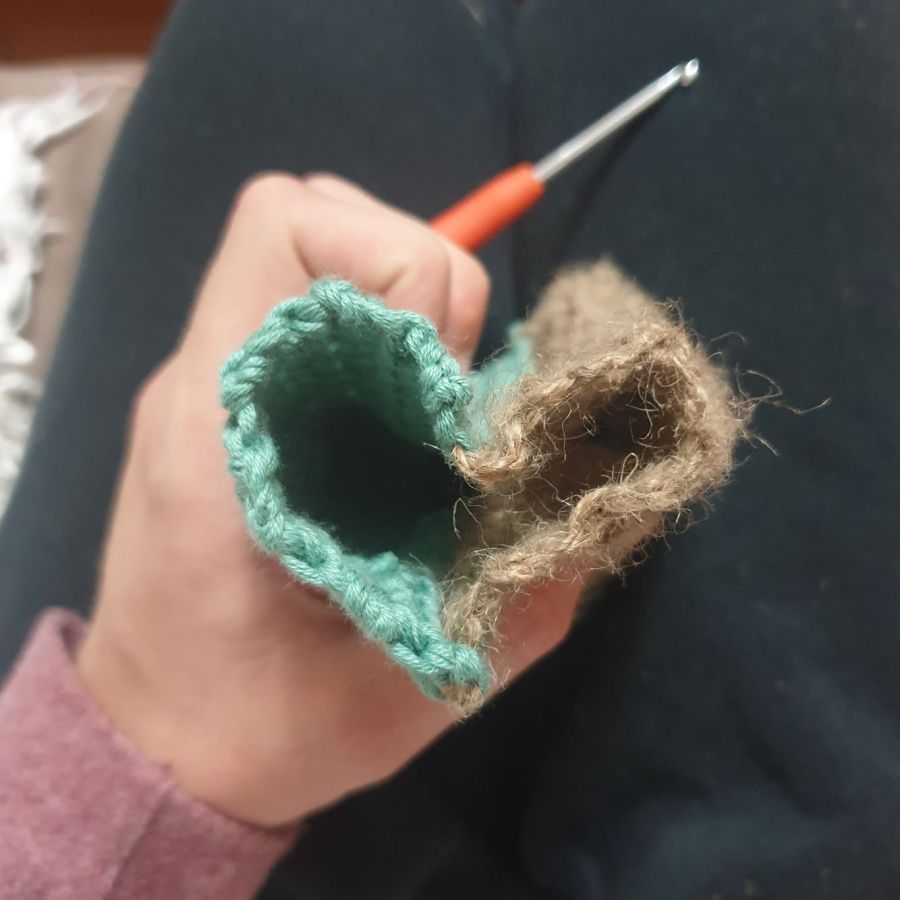
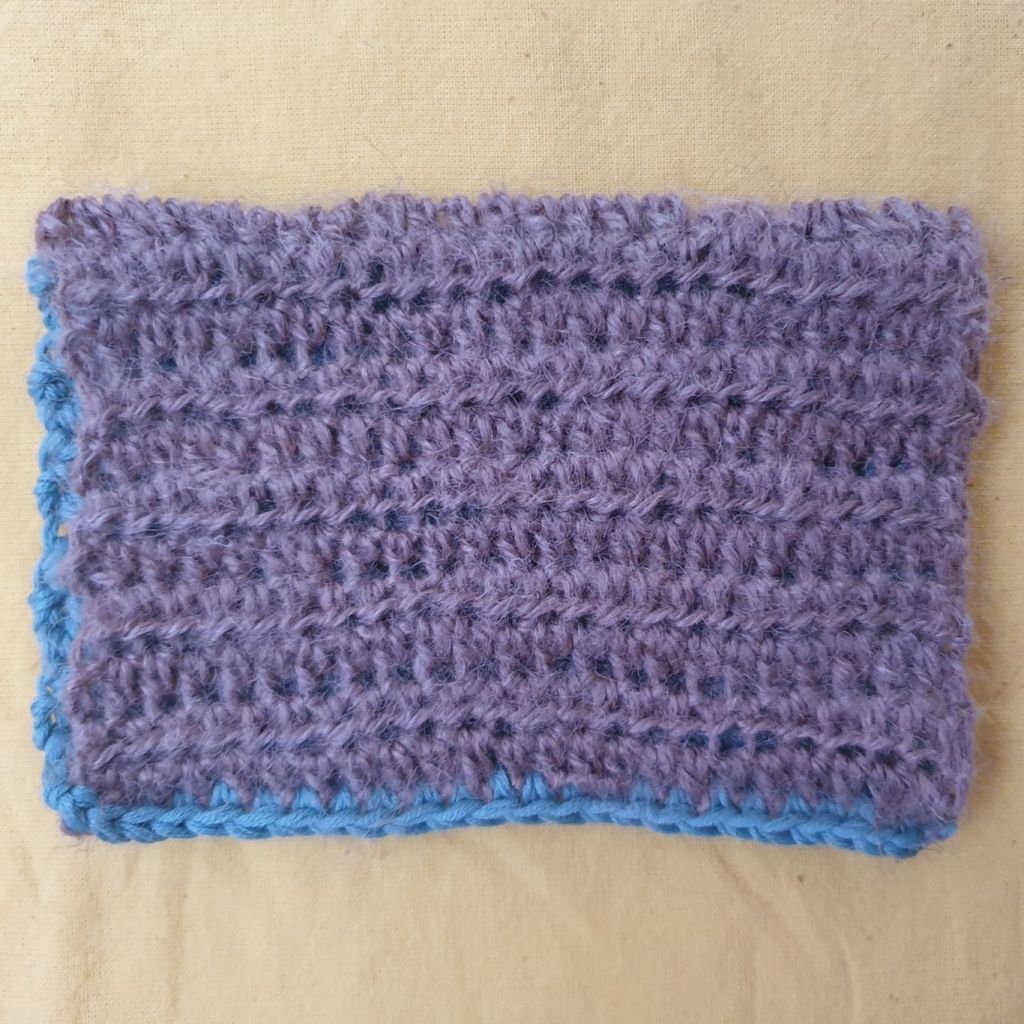
Just remember when you’re buying yarn for crochet and knitting, all of the synthetic fibres out there are creating microplastics that enter our environment and our bodies. I like to stick to cotton and hemp yarn when I’m making items for cleaning. I designed this scrubber sponge pattern so that one side is made from hemp yarn for extra scouring power and the other side is made of cotton for regular wiping and scrubbing.

Hemp side
Cotton side

Detour: Here is my video explaining the trouble with microplastics https://youtu.be/Uspk3LOrfjY

I’ve called this deisgn a multipurpose scrubber sponge because it’s useful for cleaning in any room of the house, not just the kitchen. Keep one of these in your bathroom and laundry too. You’ll be reaching for it to clean every surface in your home.

This is my first time writing a pattern for other people to use so please let me know if there are any mistakes!

The Pattern: Hemp and Cotton Scrubber Sponge

  • Patern notes:
  • This pattern is written in US Crochet terms.
  • Begin with a foundation chain and make the sponge as long as you like. You can keep adding rows to make the sponge wider. I found this size works best for my small lady hands but you might prefer an oversized style sponge.
  • Abbreviations:
  • Ch: Chain
  • Sc: Single crochet
  • Hdc: Half double crochet
  • Pattern:
  • With hemp yarn Ch 25
  • Row 1: Hdc in the 3rd chain from the hook. Hdc all the way along.
  • Rows 2 – 12: Ch 2 for the turning chain. Hdc to the end of the row.
  • Attach cotton yarn and cut off the hemp yarn.
  • Row 12: Sc along the long edge of the hemp rectangle.
  • Rows 13 – 24: Hdc to the end of the row. Don’t bind off yet!
  • Finishing: Still with your cotton sitting at the end of Row 24, fold the 2 halves of the sponge together and Sc along the other long edge to join the 2 halves. You will be crocheting into both of the stitches on each edge so they are now “sewn” together.
  • I leave the short sides open so that the air flows through the sponge for easy drying.
  • You can sew or crochet up the short sides if you desire.

Let me know in the comments if you try out this pattern. Tell us what you think!

You can purchase one of these scrubbers at my Storenvy store and check out my other crochet creations for sale.

Finding Gratitude During Tough Times

Gratitude is already a difficult practice at the best of times. So how do you tap into those feelings of gratitude when you’re not feeling grateful for the bad experiences happening around you? Or maybe you’ve been feeling depressed for a whlie and you’re not sure how you can feel gratitude at all. There are some easy exercises you can introduce into your life that will help bring feelings of gratitude even when things around you seem grim.

Why would I want to experience gratitude?

  • Resilience
    • Resilience is a meta-skill that can help you get through the darkest days. Notice how difficult times are easier to navigate through when your thoughts are coming from a positive slant. Any negative emotions that could lead to unproductive actions or reactions can be challenged and re-framed into productive motivation. Gratitude isn’t about completely removing sadness and negativity, but it is used to help process those difficult feelings.
  • Good mental health
    • Remaining in depression and a negative mindset will hinder your path to better mental health. When your mental health hasn’t been tip top, it’s so important to address it just like you would any injury that is affecting your daily life. You may not see how poor mental health is affecting you day-to-day but it does affect the way you perceive every personal experience and your interactions with the people around you.
  • Life is easier
  • Everything around you is exactly what you need and want at this point in time. When you have gratitude in your life you will be completely grateful for your current possessions. You’ll notice that the importance you’ve placed on material objects is diminished and you are better for it. You’re no longer stressing about having more, being more, doing more.

How to begin your gratitude journey

Gratefully accepting the situation around us is the basic idea of the practice of gratitude. Life is already difficult, that is something we must accept. But we don’t need to accept the negativity and mental rut that can come from difficult life experiences.

  • Focus on the good
  • Your perception of the world will frame how you respond to your present situation. Hindsight is a wonderful thing but you need to identify the blessings in disguise. Maybe the unexpected loss of your job has led to you investing more time into your passions and a more rewarding type of work.
  • Time and patience helps
  • Be kind to yourself and grant yourself patience without judgement. Any negative jugemental thoughts about yourself will only hinder your path towards feeling gratitude.
  • Find joy in small things
  • Taking the time to focus on the little things in your life that make you smile will serve as a reminder of the positivity surrounding you. This practice also helps you feel less concerned with the things you don’t have and distracts your thoughts from negative emotions.
  • Thought swapping
  • Stay in control of your feelings and actions by reframing any of your unproductive and negative thoghts into the postive. This pratice is also known as CBT or Cognitive Behavioural Therapy. You are acknowledging the difficult internal thoughts and making the choice to move away from them and towards reconnection with the world around you.

Wishing you all the best as you introduce gratitude into your life. Leave some comments below sharing your experience with gratitude.

Check out my youtube channel for more wellness and tutorials and click subscribe to show your support: https://www.youtube.com/user/queeenvk/videos

The power of journaling

What is journaling?

The basic idea is that you record your thoughts, emotions and experiences. Normally this is done daily in a book. The act of writing things down encourages the information to be stored more effectively in your memory.

Why journal? Is it right for you?

Writing down your thoughts right before sleep can help to release your brain from the noise of the day. Or you might like to keep record of exciting or happy memories. For example, I have a memory that I wrote in 3 separate journals because it was so exciting at the time. At the age of 10 I watched a dog give birth to a litter of puppies. In my first 10 years of life that was the most amazing thing I had ever experienced and I needed to record it. Eventually my young mind started worrying I would forget my memories and made sure to journal all my family holidays and various events in my life. Now in my 30s I gladly live mindfully in the moment without fear of forgetting the past. We do not need to be attached to our past in a way that affects our mental health negatively.

Writing things down can help you to let some difficult emotions go. Once the thoughts and fears are set out on the page in front of you they don’t seem so big and overwhelming. And bonus, you don’t feel the pressure to keep the thoughts and memories in your head because they’re recorded for you already. That takes a lot of stress off your brain.

According to various articles from psychological research there are positive and negative outcomes to journaling. It can either help you understand yourself in relation to others or it can hinder your self discovery journey if you only concentrate on “yourself in isolation”. The results of a collection of research articles include the following positive and negative outcomes of journaling.

The pros of journaling

  • Encourages you to evaluate your reactions and emotions
    • Identify action vs reaction. Reaction is what we do with our “monkey brain” when we act on impulse without consideration.
  • Allows you to find resolutions to open issues
    • You can see all aspects of a problem when it’s written out in front of you.
  • Clarifies your views and motivations.
  • Focuses your negative energy into creativity and positivity.
  • Increases your tolerance of change and unpredictable or unexpected situations.
  • Improves mental health by making you feel more connected to the world around you.
  • Helps you define your goals and encourages action through motivation.

The cons of journaling

  • Causes negative rumination
    • You live within your own negative thoughts.
  • Prevents you from living in the moment
    • You begin to focus on how you’ll record your life events instead of experiencing them.
  • Makes you become egocentric and obsessed with your needs.
  • Allows you to blame the situations around you but not come to any positive conclusions.
  • Prevent resilience by encouraging thoughts to remain on negative experiences.

Maintaining the habit of journaling regularly can be a challenge. Although it becomes easy once it becomes part of your daily routine. Encourage yourself to keep at it by making it a fun and rewarding experience. Use different coloured pens and highlighters to really engage with your journal pages. I have an old sticker collection from my youth that I’m re-purposing in my journals, cards, labels and craft. Some are those holographic stickers from the 90s, they really jazz up a sparse journal page.

Thanks so much for reading! Comment below with your journal experiences. Or share your tips and hints to make the most of our journaling journey.

Subscribe to my YouTube channel to show your support for The Full Cup Wellness.