Mindfulness Anytime Anywhere

Tip: At the bottom of this page you can hear me read this blog post out for you in the podcast player. Some other blog posts are available too.

Mindfulness is the art of being in the present moment. I say art because it’s something that can be practised and honed. You may not be an expert at mindfulness meditation but you can be if you want to be. The trick is to practise. Mindfulness is a brain training exercise that will benefit you in surprising ways. When I first heard about mindfulness meditation I thought it was only for hipsters, hippies and monks. True! I had no idea what it involved or how it could help me. Now I know it can help anyone. Mindfulness is beneficial for children, teens, adults and those who don’t identify with any particular age group.

If mindfulness is being in the present moment, how do I get there? And stay there?

It’s all too easy to worry about the future or be upset by thoughts of the past. There is a better, more productive way to live. In the present. There are some meditation techniques to help you find the present moment in your mind. Try some of these techniques and figure out what works best for you. It could even be a combination of techniques that you find most helpful.

Use your senses

The five senses can be used to gently move your focus back to the present moment.

Touch: Bring your focus back to the present moment by feeling your way there. You don’t need special tools to do this. Your clothing may be soft or you may have a pet at home. Feel some fabric or the soft fur (or scales) of your beloved pet and focus on how your fingers receive this sensation. Is it smooth? Is it warm? Acknowledge any thoughts and feelings you may have. Let yourself feel those feelings and bring your thoughts back to the absolute present moment. There are no worries of the past or future when you are focused on the present. Another form of touch is the feeling of your feet on the ground or your body against your chair. There’ll be more on that sensation later.

Smell and taste: Ask yourself what smells can you detect right now. Are there any tastes on your tongue? Mindful eating is the perfect way to enjoy your meals because you will fully engage with the flavours and sensations of the food. Breathe in the aroma of your cup of tea or coffee or cocoa.

Hearing: Focus on the sounds reaching your ears within in the room or nearby area. Then extend your awareness to the sounds outside of the room or area. Acknowledge the sounds without judgment. If your thoughts begin to wander show yourself patience and allow your thoughts to drift back to the present moment.

Sight: Whether your eyes are open or closed you can focus on what they are seeing. While they’re closed you can acknowledge whether the environment is bright or dim. Or visualise a candle, which is a common meditation technique, and see how long you can focus on the imagined flame. If you need to have your eyes open, such as during a walk or while driving, you can use the world around you to stay present. The next time you’re out for a walk try a walking meditation to stay in the mindul present. During a walking meditation you can ask yourself, what’s the sky up to today? Are there any clouds or birds or sky writers? Acknowledge your surroundings and your position within them, how tall the trees are, how the leaves move in the breeze. You can add in the other senses too, focus on how warm or cool the air feels on your skin and what smells are reaching your nose.

Grounding

If you have read the paragraph on the sense of touch above you will have an idea of this one already. Grounding involves feeling your connection to the Earth through your feet or your body. You can do this with socks or bare feet or in shoes while sitting or you can be lying down or sitting upright. The point is to envision your connection to the ground while feeling the physical connection through your body. Focus on the space at which you feel your body touching the ground. Remain in the present moment by just being and feeling your existence physically. You are present in this place at this time. No past or future concerns are harming you and they have no power in your present moment.

Breathing and heartbeat

Your breath and your heartbeat are always there. Often it’s not quiet enough to hear either of them, but it is normally possible to feel them. You can feel your own pulse by pressing your forefinger and middle finger (not your thumb as it has its own pulse) against the inside of your wrist or your neck next to your windpipe. Sometimes it’s difficult to find your pulse. I find it easier to find my breath. Sometimes when I’m trying to sleep I hear my heartbeat is too fast because I was WORRYING about the past or the future. In those moments I tell myself I can learn to slow my heartbeat by focusing on my breathing. They seem to go hand in hand. With enough practice you can have this other level of control over your body.

Breathing deep, soothing breaths is a common way to calm yourself during moments of stress that have caused an increase in your heart rate. You can also focus on the calming breaths as you breathe them to bring yourself to the present moment. The breath is very powerful in this way. It’s something you can always bring your awareness back to. Observe yourself in the moment just breathing. Your eyes can be closed if it’s safe to do so. If any thoughts or emotions come to your mind you can let them pass by and float away with your breath. Let your focus be only on your breath and how it feels flowing in and out. Be in the present moment with your breath. No worries or emotions can hurt you in the present moment.

Curiosity

When was the last time you were a beginner at something? Or looked at something you’ve never seen before? When you learn something new you focus on each step carefully, individually. Once you’ve mastered a skill you no longer think twice about performing it. You don’t look at the steps closely or consider how each part comes together, it is just assumed. The world around you can also blur together as you assume the common objects you see every day. Un-blur your mind and focus on an object like you are a baby and have no understanding of the object. Create curiosity within your mind and come back to the present by really fully focusing on an object or a skill such as hula hooping or throwing a ball. Consider how it feels but without emotion or judgement. No judgement of causes or effects. Just see it for what it is in the moment and enjoy every one of those moments. You are present. You exist and it is amazing.

Key points:

Remember to allow yourself to feel emotions and acknowledge your thoughts when they wander. Be kind with yourself, no need to be discouraged when you stray from the present moment.

It’s okay to feel anger, happiness, all of the good and bad emotions are valid. But remind yourself that good or bad, the emotions are only temporary. You can control how you feel. The past cannot harm you.

The worries of the future are holding you back from focusing on your present moment. The future will happen whether or not you fixate on it. Fixation on the future cannot help you prepare for it. You have total control of your body in the present moment. You have the power to make it however you want it to be right now. You choose if you stand up and breathe in the fresh air or stay where you are. You choose whether you sit in sadness and worry about what others think about you. Are you worrying about those people? No. Then they aren’t worrying about you. You’re here in the present moment, make it whatever YOU want it to be.

Side note: Every other fellow human is also living and existing on the Earth just like you, searching for contentment and safety. If you or they are displaying angry emotions then it is because you/they are scared or hurt. We are able to choose how we react if we are wholly in the present moment. We are powerful enough to create the present that we want to exist in. Remain present, ask yourself why you are feeling a particular emotion and you can choose whether you alter your behaviour based on your anger, hurt or fear. Or choose to breathe and stay in control of your present.

Thank you so much for reading. Be kind and be present.

Visit my Youtube channel for more Full Cup Wellness online. Visit my store on Storenvy for my crochet creations.
Crochet your own waste-free scrubber sponges

Now that we have learned the mindful skill of crochet we can make our own custom items. You can get creative and design your own clothes, toys, household items, art… imagine all of the possibilities.

Imagine a waste-free home…

Or at least a reduced waste home. A home without plastic in the cleaning cupboard! All of the microfibre cleaning cloths and sponges you have used to clean your home have been creating plastic waste and contributing to landfil. Thankfully there are so many amazing alternatives that are even more effective at cleaning. It’s so easy to make the switch to something better for you and the environment.

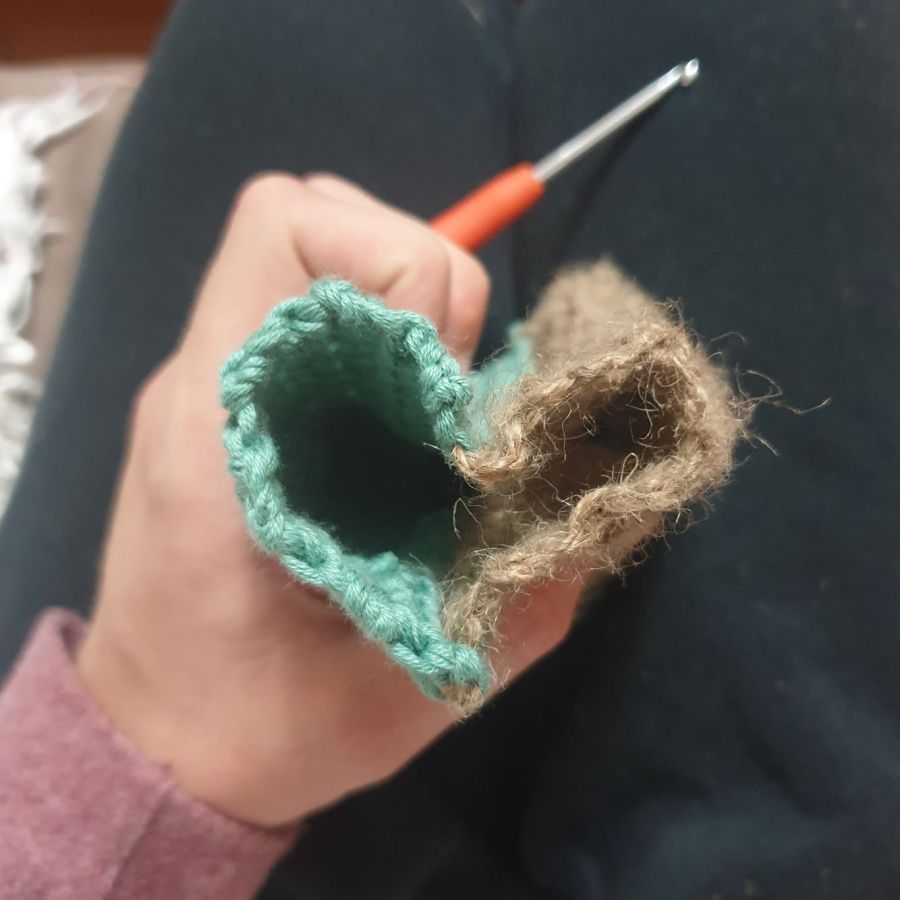
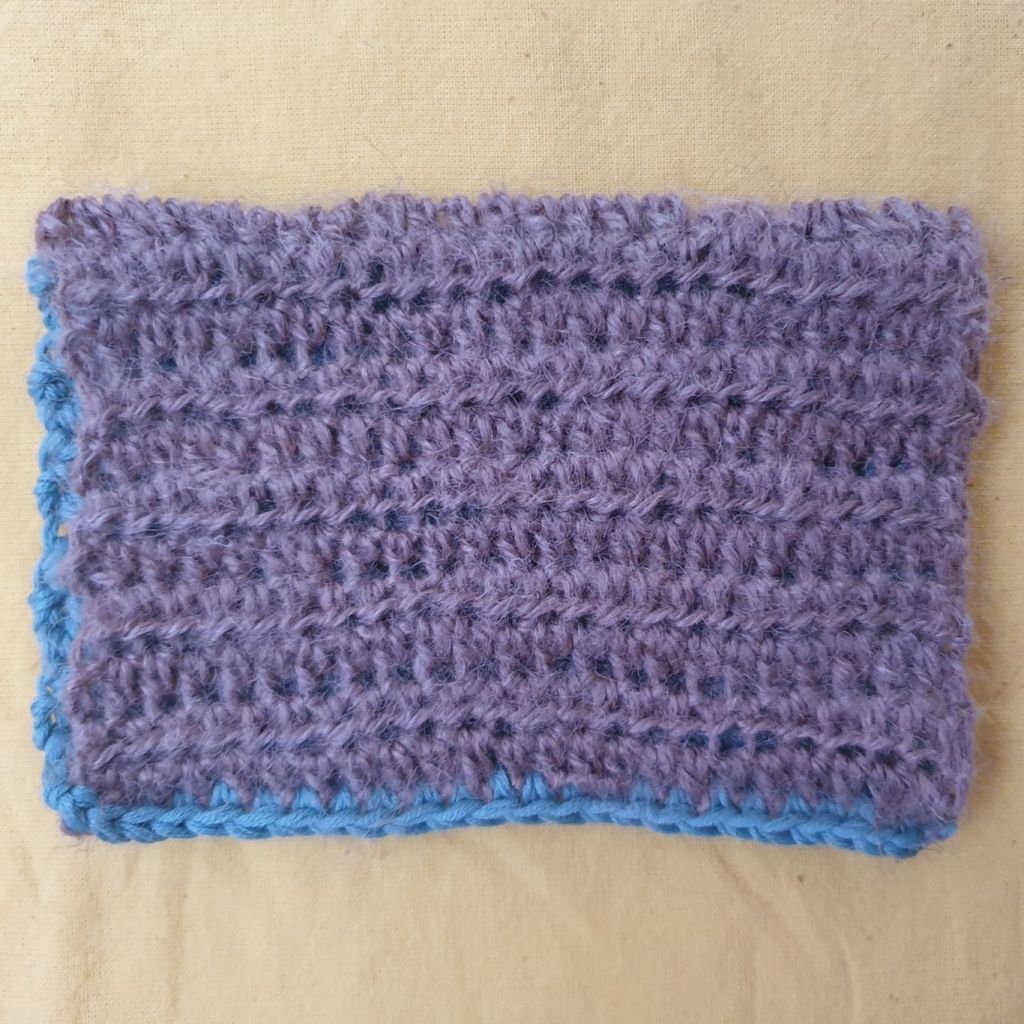
Just remember when you’re buying yarn for crochet and knitting, all of the synthetic fibres out there are creating microplastics that enter our environment and our bodies. I like to stick to cotton and hemp yarn when I’m making items for cleaning. I designed this scrubber sponge pattern so that one side is made from hemp yarn for extra scouring power and the other side is made of cotton for regular wiping and scrubbing.

Hemp side
Cotton side

Detour: Here is my video explaining the trouble with microplastics https://youtu.be/Uspk3LOrfjY

I’ve called this deisgn a multipurpose scrubber sponge because it’s useful for cleaning in any room of the house, not just the kitchen. Keep one of these in your bathroom and laundry too. You’ll be reaching for it to clean every surface in your home.

This is my first time writing a pattern for other people to use so please let me know if there are any mistakes!

The Pattern: Hemp and Cotton Scrubber Sponge

  • Patern notes:
  • This pattern is written in US Crochet terms.
  • Begin with a foundation chain and make the sponge as long as you like. You can keep adding rows to make the sponge wider. I found this size works best for my small lady hands but you might prefer an oversized style sponge.
  • Abbreviations:
  • Ch: Chain
  • Sc: Single crochet
  • Hdc: Half double crochet
  • Pattern:
  • With hemp yarn Ch 25
  • Row 1: Hdc in the 3rd chain from the hook. Hdc all the way along.
  • Rows 2 – 12: Ch 2 for the turning chain. Hdc to the end of the row.
  • Attach cotton yarn and cut off the hemp yarn.
  • Row 12: Sc along the long edge of the hemp rectangle.
  • Rows 13 – 24: Hdc to the end of the row. Don’t bind off yet!
  • Finishing: Still with your cotton sitting at the end of Row 24, fold the 2 halves of the sponge together and Sc along the other long edge to join the 2 halves. You will be crocheting into both of the stitches on each edge so they are now “sewn” together.
  • I leave the short sides open so that the air flows through the sponge for easy drying.
  • You can sew or crochet up the short sides if you desire.

Let me know in the comments if you try out this pattern. Tell us what you think!

You can purchase one of these scrubbers at my Storenvy store and check out my other crochet creations for sale.

Finding Gratitude During Tough Times

Gratitude is already a difficult practice at the best of times. So how do you tap into those feelings of gratitude when you’re not feeling grateful for the bad experiences happening around you? Or maybe you’ve been feeling depressed for a whlie and you’re not sure how you can feel gratitude at all. There are some easy exercises you can introduce into your life that will help bring feelings of gratitude even when things around you seem grim.

Why would I want to experience gratitude?

  • Resilience
    • Resilience is a meta-skill that can help you get through the darkest days. Notice how difficult times are easier to navigate through when your thoughts are coming from a positive slant. Any negative emotions that could lead to unproductive actions or reactions can be challenged and re-framed into productive motivation. Gratitude isn’t about completely removing sadness and negativity, but it is used to help process those difficult feelings.
  • Good mental health
    • Remaining in depression and a negative mindset will hinder your path to better mental health. When your mental health hasn’t been tip top, it’s so important to address it just like you would any injury that is affecting your daily life. You may not see how poor mental health is affecting you day-to-day but it does affect the way you perceive every personal experience and your interactions with the people around you.
  • Life is easier
  • Everything around you is exactly what you need and want at this point in time. When you have gratitude in your life you will be completely grateful for your current possessions. You’ll notice that the importance you’ve placed on material objects is diminished and you are better for it. You’re no longer stressing about having more, being more, doing more.

How to begin your gratitude journey

Gratefully accepting the situation around us is the basic idea of the practice of gratitude. Life is already difficult, that is something we must accept. But we don’t need to accept the negativity and mental rut that can come from difficult life experiences.

  • Focus on the good
  • Your perception of the world will frame how you respond to your present situation. Hindsight is a wonderful thing but you need to identify the blessings in disguise. Maybe the unexpected loss of your job has led to you investing more time into your passions and a more rewarding type of work.
  • Time and patience helps
  • Be kind to yourself and grant yourself patience without judgement. Any negative jugemental thoughts about yourself will only hinder your path towards feeling gratitude.
  • Find joy in small things
  • Taking the time to focus on the little things in your life that make you smile will serve as a reminder of the positivity surrounding you. This practice also helps you feel less concerned with the things you don’t have and distracts your thoughts from negative emotions.
  • Thought swapping
  • Stay in control of your feelings and actions by reframing any of your unproductive and negative thoghts into the postive. This pratice is also known as CBT or Cognitive Behavioural Therapy. You are acknowledging the difficult internal thoughts and making the choice to move away from them and towards reconnection with the world around you.

Wishing you all the best as you introduce gratitude into your life. Leave some comments below sharing your experience with gratitude.

Check out my youtube channel for more wellness and tutorials and click subscribe to show your support: https://www.youtube.com/user/queeenvk/videos

Crochet For Absolute Beginners: Sculpting With Yarn

Working with just a crochet hook and a ball of yarn (or 5) you can create many different textures and shapes in your very own crochet project.

There are different parts of the stitch in which we can work into. This causes the yarn to be pulled in different directions so you can shape your work into whatever design you design.

Working into the post

You can crochet a stitch around the front of a post of a crochet stitch. Or you can crochet around the back. When reading a crochet pattern these stitches are called Front Post and Back Post crochet. Normally this term is abbreviated with the type of crochet stitch, for example, a double crochet stitch worked into the front of a post in a stitch is called FPDC. Similarly, we can have back post treble crochet written as BPTC.

Front Post Double Crochet (FPDC)

Working into the post of a previous row of double crochet (US terminology from here onwards) can be done around the front of the work. In the video below I show how to do a FPDC. My YouTube video explains in detail how to make this stitch.

Front Post Double Crochet

You make a FPDC by putting your crochet hook through the post of the next stitch from the front of the work.

Back Post Double Crochet (BPDC)

Working from the back of the work you can make a stitch around the back of a double crochet post. Or a treble crochet post! In the video below I have done a BPDC. My YouTube video explains how to do it too.

Back Post Double Crochet

Insert your hook from the back of the work, through the DC post of the next stitch. Work the rest of the DC as normal.

Working into the front and back loops

Front loop only (FLO) and back loop only (BLO) stitches can create edges for your work to give it a 3D shape.

Front loop only (FLO)

The FLO and BLO stitches are super easy. Just work your next stitch into one of the loops at the top of your stitches. This can be done for any height stitch because you’re just using the top loops this time.

Back loop only (BLO)

Increases and decreases

Your rows and circles don’t need to stay the same size. To create shapes with your yarn and crochet hook you’ll need to learn to increase and decrease the number of stitches in your rows and rounds. Increases in a crochet pattern are abbreviated as sc inc for adding a single crochet stitch to a row. The stitch type is usually included otherwise it’ll just say inc and you continue using the same stitch as the rest of the row.

Single crochet increase

To increase a stitch in a row simply place 2 stitches in the same stitch. See my YouTube video for a full explanation.

Crochet patterns abbreviate decreases to Dec or Sc2tog which means single crochet two together. Or it’ll say DC or Tr depending on the stitch required in the pattern.

Single crochet decrease

To decrease the number of stitches in your row by 1 you will crochet 2 stitches together into 1. For a single crochet decrease: put your hook into the stitch and pull up a loop, don’t complete the stitch yet. Put your hook into the 2nd stitch along and pull up a loop, you’ll have 3 loops on your hook. Then finally pull up a loop through all 3 loops to complete the SC Dec.

Thanks so much for reading. Your support means everything to me. Sending my gratitude and kind thoughts to you all. ❤

The power of journaling

What is journaling?

The basic idea is that you record your thoughts, emotions and experiences. Normally this is done daily in a book. The act of writing things down encourages the information to be stored more effectively in your memory.

Why journal? Is it right for you?

Writing down your thoughts right before sleep can help to release your brain from the noise of the day. Or you might like to keep record of exciting or happy memories. For example, I have a memory that I wrote in 3 separate journals because it was so exciting at the time. At the age of 10 I watched a dog give birth to a litter of puppies. In my first 10 years of life that was the most amazing thing I had ever experienced and I needed to record it. Eventually my young mind started worrying I would forget my memories and made sure to journal all my family holidays and various events in my life. Now in my 30s I gladly live mindfully in the moment without fear of forgetting the past. We do not need to be attached to our past in a way that affects our mental health negatively.

Writing things down can help you to let some difficult emotions go. Once the thoughts and fears are set out on the page in front of you they don’t seem so big and overwhelming. And bonus, you don’t feel the pressure to keep the thoughts and memories in your head because they’re recorded for you already. That takes a lot of stress off your brain.

According to various articles from psychological research there are positive and negative outcomes to journaling. It can either help you understand yourself in relation to others or it can hinder your self discovery journey if you only concentrate on “yourself in isolation”. The results of a collection of research articles include the following positive and negative outcomes of journaling.

The pros of journaling

  • Encourages you to evaluate your reactions and emotions
    • Identify action vs reaction. Reaction is what we do with our “monkey brain” when we act on impulse without consideration.
  • Allows you to find resolutions to open issues
    • You can see all aspects of a problem when it’s written out in front of you.
  • Clarifies your views and motivations.
  • Focuses your negative energy into creativity and positivity.
  • Increases your tolerance of change and unpredictable or unexpected situations.
  • Improves mental health by making you feel more connected to the world around you.
  • Helps you define your goals and encourages action through motivation.

The cons of journaling

  • Causes negative rumination
    • You live within your own negative thoughts.
  • Prevents you from living in the moment
    • You begin to focus on how you’ll record your life events instead of experiencing them.
  • Makes you become egocentric and obsessed with your needs.
  • Allows you to blame the situations around you but not come to any positive conclusions.
  • Prevent resilience by encouraging thoughts to remain on negative experiences.

Maintaining the habit of journaling regularly can be a challenge. Although it becomes easy once it becomes part of your daily routine. Encourage yourself to keep at it by making it a fun and rewarding experience. Use different coloured pens and highlighters to really engage with your journal pages. I have an old sticker collection from my youth that I’m re-purposing in my journals, cards, labels and craft. Some are those holographic stickers from the 90s, they really jazz up a sparse journal page.

Thanks so much for reading! Comment below with your journal experiences. Or share your tips and hints to make the most of our journaling journey.

Subscribe to my YouTube channel to show your support for The Full Cup Wellness.

Prevent creating enormous amounts of waste and save money by making these simple switches

Do you change your kitchen sponge every 3 weeks like you should? Oops… Maybe we’re a bit lax on that hygiene suggestion. But disposable items around the house do add up to a lot of landfill. Just think of all those used toothbrushes and disposable razors. *shudders*

Hang on a moment, I’ve just thought about all of the money spent on disposable razors and sponges. Oh my…

Sponges and paper towels

Even if you don’t change your sponge as often as you do each sponge you do discard is creating more waste in our environment. Along with sponges, paper towels cannot be recycled or reused so they end up as landfill too. In the long term you spend a lot of cash on these frequently used products in your kitchen and cleaning cupboard.

Switches to reduce waste:

  • Use cleaning cloths that you throw in the wash with your towels and bath mats. These can be old rags or cotton cloths. Avoiding plastic items, even multiple use items, will reduce the impact of microplastics entering our environment.
  • Dish scrubbers made from natural fibres such as hemp or nettle yarn can be washed many times. They last even longer if you dry them out in the sunshine!
I made hemp scrubbers for my family’s Christmas gifts. They’re for exfoliating in the shower but they also make really excellent cleaning scrubbers around the bathroom and kitchen. They dry faster than crochet cotton dishcloths. Contact me if you’d like to design a multipurpose hemp scrubber. I have hemp yarn in stock!

Tissues

Paper tissue fibres, as with paper towels, are too short to go into the recycling bin. Tissues will always be a contribution to landfill unless you consider other options. The cost of buying tissues also adds up over time.

Switches for tissues:

  • Convert old clothes and rags into handkerchiefs. Hankies are useful to keep in your pocket or handbag for mopping up any little spills or dirty fingers. Just throw them in the washing machine with your regular laundry.
  • Thrift stores sometimes have packs of hankies for a very good price. Think of how much use you get from a 50 cent handkerchief compared with a 50 cent box of tissues. Boom. All those extra coins you would have spent on tissue boxes, put them in a savings account. You’re winning already.

Toothbrushes and shower loofahs

Toothbrushes should always be replaced at the beginning of the new season, ie. Every 3 months. Changing my toothbrush when the season changes is the easiest memory trigger for me. You need to change your toothbrush to ensure it’s always effective. It’s kind of like an expiry date. Plastic shower loofahs and pouffes should be changed every 3 weeks like your kitchen sponge to avoid build up of mildew. Washable shower scrubbers are waiting out there for you to make the switch today. There are more waste reducing tips in the list below.

Now cast your mind to all of the plastic toothbrushes that have been made since they were first sold in the 1930s.

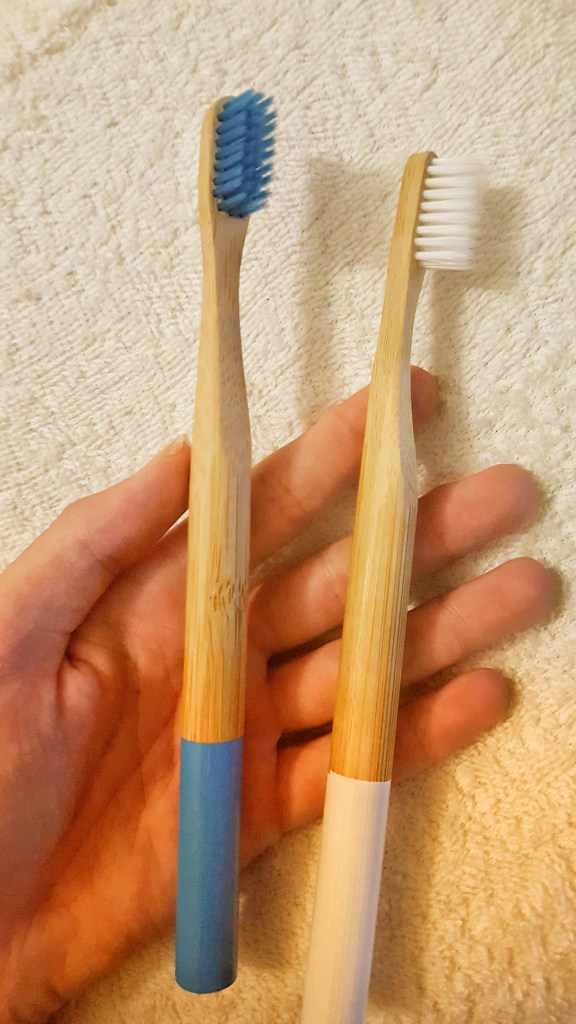
Bamboo toothbrushes from Sandcloud but it looks like they are discontinued from the website.

How to reduce your impact on the environment:

  • Bamboo toothbrushes can be composted but their bristles cannot. Remove the bristles and add the bamboo to your compost. Items that can decompose naturally don’t actually properly decompose in landfill due to the lack of oxygen.
  • Grow your own loofahs from gourds.
  • Buy or crochet your own cotton body washers using help yarn for exfoliating or special scrubbie yarn like my exfoliating shower mitts.
Handmade body pouffe made from 100% cotton yarn. Contact me for orders. 4 colours available.

Food waste

As mentioned in the above dot point the food you throw into the bin doesn’t actually break down properly. The low oxygen environment in landfill is the perfect habitat for anaerobic bacteria. These are the little creatures who produce methane.

Reducing food waste:

  • Compost: create a section of your yard with a compost heap. Add some worms! You can feed the rest of your garden with the nutrients produced from the composting process.
  • Bokashi bucket: no yard? No problem. When I was living in an apartment I kept my small Urban Composter City bokashi bucket on the balcony. It has a handy tap to distribute the composted nutrients.
  • Create an “Eat first” section of the fridge so that you’re eating up leftovers and soft fruit before they are ready to be thrown out.
  • Write a shopping list and remember to actually take it to the shops. The list helps you remember that you still have a bag of cucumbers in the fridge and you don’t need to buy any more.

Makeup wipes and cotton rounds

Removing makeup every night and applying toner every morning adds up to a lot of single use cotton rounds if you’re into that kind of thing.

Switch single use cotton rounds for:

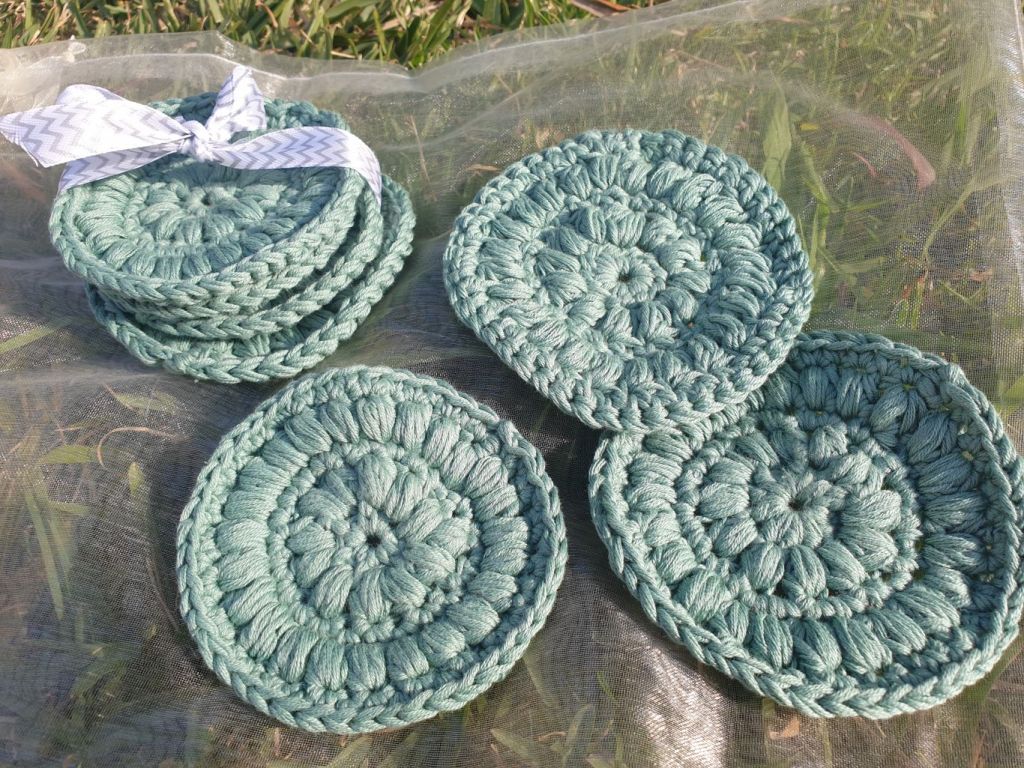
My handmade cotton rounds. Available for sale in packs of 3.

Disposable razors

Cheap plastic disposable razors are so convenient but they never last very long. So you’re buying more and more, spending more and throwing them all away sooner than you expected.

Cost effective switches for shaving with disposable razors:

Fast fashion

You might be surprised to know that the textile industry creates more carbon emissions than the airline industry. It certainly surprised me! When you stop and think about every purchase you make you can not only save yourself from unnecessary spending but it also reduces your impact on the Earth. 🌍 Our home.

Tips to reduce fast fashion in your life:

  • Switch to the slow fashion life.
    • Purchase quality garments that are made to last more than a couple of seasons. In the long run you save money especially when you repair buttons and small holes to extend the life of your garment.
  • Rent clothing for special occasions.

As always, thanks so much for reading. Click the YouTube icon below to go to my channel and see a list of my latest videos. Like and subscribe to share some happiness.

Crochet For Absolute Beginners: The Basic Tools To Begin Crocheting

Where do you begin when you want to try your hand at some crochet? What tools do you need? Are there different types of crochet hooks? How many yarns are there?Read on to find out.

The Yarn

The type of project will determine how thick the yarn should be. Are you making a chunky blanket or a delicate little plushie? Yarn comes in different levels of chunkiness depending on the ply. Delicate lace, small toys or miniature amigurumi are made with 1 – 3 ply yarns. Big chunky pieces are made with 10 – 14 ply yarn. Most jumpers and beanies are made using your average 8 ply yarn. There are some specific terms for different sizes of yarn like “sock weight”, “DK” and “Aran” which are used to signify the ply. Yarn labels will usually say these terms along with the recommended crochet hook and knitting needle sizes for the yarn. Use all this information to help you select the right hook size for your project, more on crochet hooks below.

The desired outcome of your project will also determine the yarn type. Are you making a soft and fluffy pillow? Or do you need yarn that is stiff and abrasive for making cleaning cloths and pot scrubbers? Are you creating a light and breezy top? Or a warm coat? I use hemp yarn to make scrubbies for cleaning because of its rough texture. Alpaca yarn is very soft, light, drapes well and it’s excellent at keeping you warm. But it’s an animal product. I really love alpacas. I think it’s more ethical than wool farming, which is just horror after horror. Segue into my next point.

Finally, this one is a soapbox moment. I implore you to take into consideration the ethical impact your yarn has on the environment. Vegan yarns are my preference although I also acknowledge the impact of cotton yarn on the environment. I compare cotton’s impact with the impact of animal farming and cruelty involved with harvesting animal products. Then I make a decision on where I want my money to go.

I choose natural fibres to avoid creating plastic waste. Synthetic fibres are much cheaper to purchase but they’re costly for the planet. Synthetic yarns may be free of animal products but I am boycotting plastic everywhere I can, especially when it comes to microplastics. It’s absolutely heartbreaking to discover microplastics have been found in the most remote parts of Antarctica and in the stomachs of all ocean wildlife. Every time we wash synthetic clothes we allow thousands of microplastics to pollute the waterways. My empathy levels are too high! I want to help make this Earth a more pleasant place to live. I am such a hippy.

The hook

The size of the hook will depend on a few things: the yarn size, type of project and your tension.

A chunky yarn will require a larger size of crochet hook. It’s really difficult to use a small crochet hook, about 2mm, with a chunky 12 ply yarn.

The type of project will also determine the hook size. A crochet toy, also known as amigurumi, requires very small stitches to ensure the stuffing doesn’t pop out. You can choose a hook size a couple of sizes smaller than you normally would with your chosen yarn, that will create smaller sized stitches. To make larger, more open stitches you can use a larger crochet hook to make looser stitches.

Thirdly, your tension (or gauge as they say in the US) will affect your work. Tension is how tightly you crochet your stitches. If you are following a crochet pattern and you are a make tight crochet stitches you’ll end up with a piece that is too short for the pattern. For example, you want to make a cardigan but you don’t have enough stitches in the rows your piece won’t fit you, even though you followed the pattern exactly right. The opposite is true, if your stitches are too loose then your piece will be too big. In that case, your choices are to either go down one or two hook sizes or adjust how many stitches you use in the pattern.

Handy hint: You can make a tension square to test how many stitches you make per cm with a particular yarn and hook. This measurement will help you make the perfect sized pieces. Take your hook and yarn that you want to use in your project and make a square approximately 15 cm by 15 cm. Count how many stitches fit in the square and use this when calculating how big your project will be. A smaller hook will make smaller stitches and vice versa. If you crochet too tightly you can go up a hook size or 2 to get the tension you need to complete your pattern.

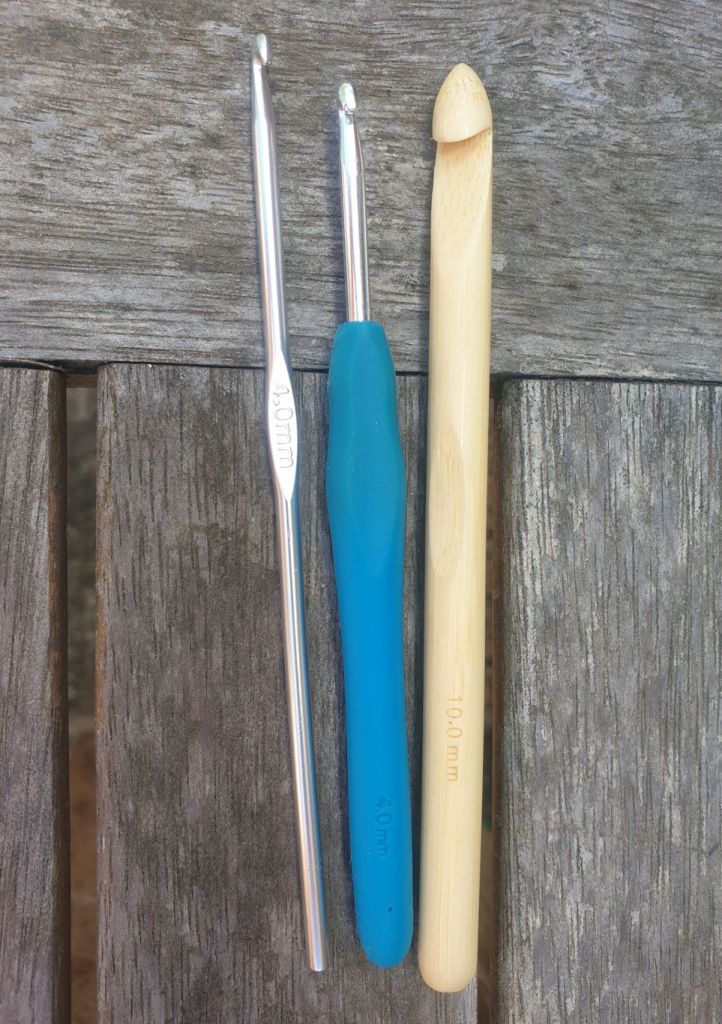
A range of crochet hooks. From left to right: A metal 4 mm hook, 4 mm hook with ergonomic handle, 10 mm bamboo hook for chunky yarn.

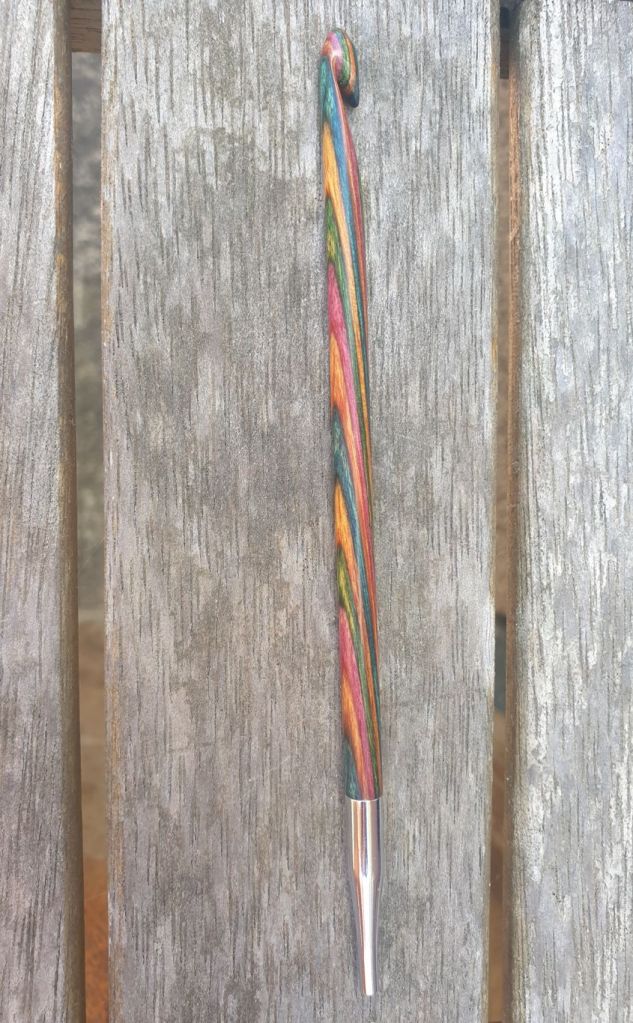
While hunting for a crochet hook you might get mixed up with Tunisian crochet. That’s a different technique that I haven’t learned yet. It’s kind of like between crochet and knitting because it uses one long crochet hook that you use like a hooked knitting needle. There’s no handle section on the Tunisian crochet hook so that your stitches remain in open loops along the length of the hook while you work each row.

Tunisian crochet hook

The extras

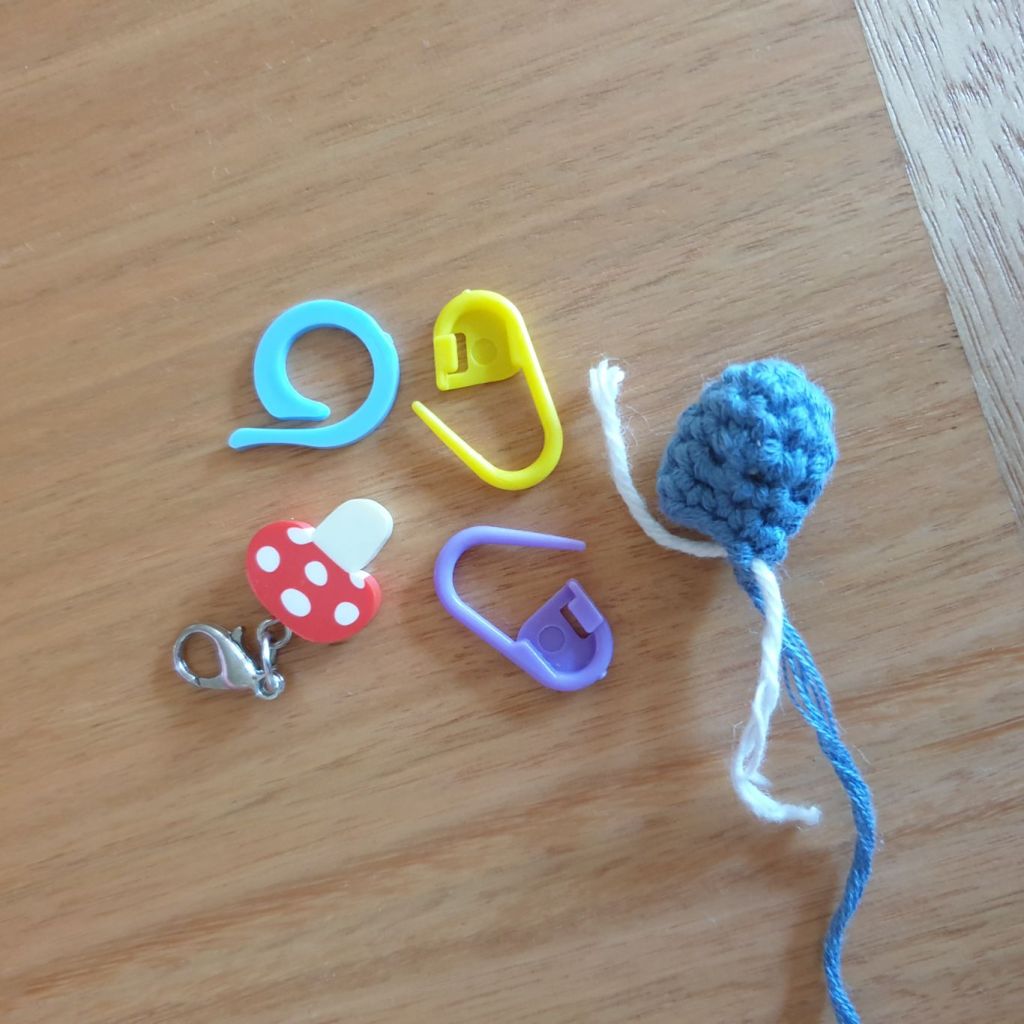
Stitch markers are a must for crocheting in the round. Place a stitch marker in the first stitch of each round so that you won’t need to keep count of every stitch of the circle. Stitch markers are also immensely useful when you’re just starting out with crocheting in rows and you find it difficult to distinguish which stitch is the final one in the row. Sometimes beginners, like when I was starting out, will work into the turning chain by mistake or will miss the final stitch of the row. Place a marker in the last stitch so you can easily find it, then with practice you’ll be able to identify the final stitch of the row.

You can make your own stitch marker from a piece of yarn that is a different colour to your work. See the picture below.

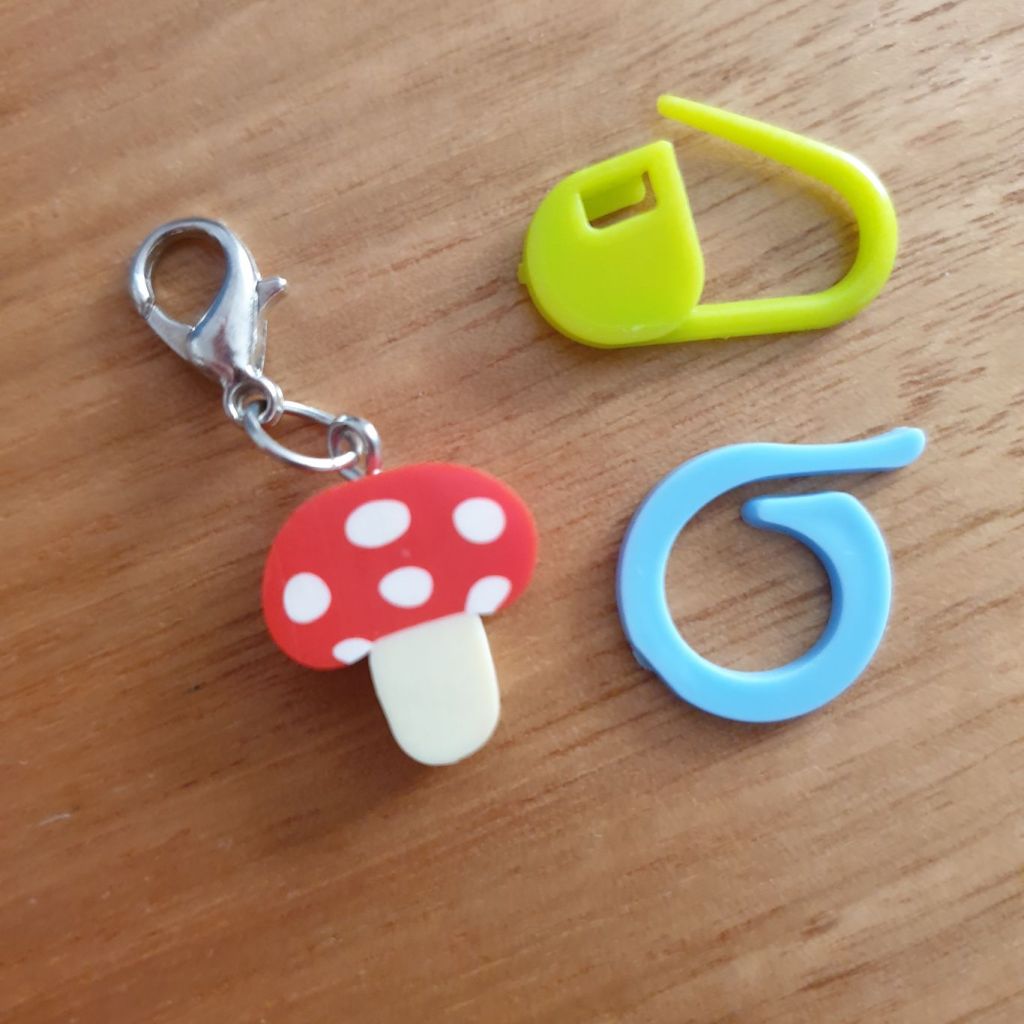
Assorted stitch markers.

Row counters are less important unless you’ve got to keep track of a lot of rows or you are following a complicated pattern.

Two row counters
A couple of row counters

A pattern or imagination

You can find multitudes of free crochet patterns online. Use any search engine or Pinterest to find patterns for specific items or to get ideas for what to make with certain types of yarn.

If you have some of your own designs that you want to create with crochet, give it a go! Have a play with the yarn, hook sizes, different stitches and techniques to see how they all work together to create a unique piece.

Thank you for reading!

Check out my YouTube channel for crochet tutorials for absolute beginners and subscribe for more Full Cup Wellness.

Browse my store on Storenvy for fun crochet items.

Crochet For Absolute Beginners part 4: Continuing to crochet in the round

FYI: The video tutorial version of this post is on my YouTube channel here.

Welcome, please sit down, get comfy and join me for some more mindful crafting. Today we’re continuing to learn the art of crocheting a circle.

In part 3 of the crochet for absolute beginners series we learned how to begin a circle with yarn and our crochet hook. Now we need to learn the mathematical formula for creating nice flat crochet circles. If you have too many or too little stitches in each round you’ll end up with wonky bumpy circles that don’t sit flat.

The blue circle on the left has too many stitches in the round and is going bubbly. The red circle on the right has too few stitches and is becoming a bowl.

The mathematical formula to the perfectly flat crochet circle goes a little something like this:

For example, we begin with 6 stitches in round 1.

In round 2 we will need to increase in every stitch around. You now have 12 stitches.

In round 3 increase every 2nd stitch. Now you have 18 stitches.

Round 4 increase every 3rd stitch. 24 stitches will be in the 4th round.

Every round will increase 6 times so you will add 6 stitches in each round. If you begin with 8 stitches you’ll increase 8 times each round. That’s the mathematical pattern here.

Tips for keeping the right number of stitches

• Use a stitch marker to mark the first stitch in every round. Otherwise you’ll be constantly counting as you work and the chance of miscounting the stitches is too great! Trust me.

Types of stitch markers. You can also use a short piece of yarn that is a different colour to your work.

• Count your stitches at the end of each round unless you’re absolutely confident you did it correctly. Otherwise your subsequent rounds will all be off. You will notice your circle becoming more bumpy and wonky as you continue.

Thanks for reading my tutorial! It would mean so much to me if you could please show your support by subscribing to my YouTube channel.

Also please enjoy browsing my online store of handmade items. Contact me for commissions and personalised items.

Crochet for absolute beginners part 3: How to begin crocheting in a circle

Continuing on our journey to learn a new skill and practise mindfulness at the same time; it’s part 3 of the crochet tutorial series, how to crochet in a circle. Instead of crocheting rows as we previously learned in parts 1 and 2, we are now going to crochet in rounds.

See the video version of this tutorial at my YouTube channel.

Why would you need to know how to crochet in circles?

By learning how to crochet in the round you’ll be able to make circular baskets, amigurumi (crocheted toys), hats, beanies, round pillows etc etc etc. There are many crochet patterns that you will encounter which involve crocheting in the round instead of in rows.

Some crochet toys (amigurumi) I made this week. Each section of this pattern is crocheted in the round. Pattern by @Amiguruku

There are two methods to begin a crochet circle.

Method 1: Chain circle

I call this the chain circle method because you make the circle by joining the 2 ends of a row of chain stitches together. Let me show you how.

Begin with a slip knot on your crochet hook. Remember: this doesn’t count as a stitch.

The pattern you are working from will tell you how many stitches to use to make the circle, unless it uses method 2 below. If you’re not using a pattern you can decide how many chain stitches you want to use depending on how many stitches need to fit in the circle. Let’s say you need 6 single crochet stitches to fit in your little chain circle. I would chain 3 then join the circle with a slip stitch in the first chain, see image below.

Three chain stitches joined to the first chain stitch with a slip stitch.

Then you can crochet into the circle you made. I put six single crochet (US terminology) stitches into my chain circle, see image below. I haven’t joined this round with a slip stitch. The pattern that you’re working from will state whether the rounds are joined with a slip stitch or not. If they are not joined rounds then you get a spiral instead of concentric circles.

Six single crochet stitches in a chain circle.

Tip: As a beginner, I sometimes mistake the initial slip knot as a stitch but we need to remember not to crochet into this loop! Join your circle in the first chain stitch and you can definitely see which is the first chain by using a stitch marker. Examples of stitch markers that I have are in the picture below. You can also use a short piece of yarn that is a different colour to your work in the stitch you want to mark.

Examples of stitch markers

New stitch alert

I mentioned the slip stitch in the previous section but I haven’t yet shown you how to do it! The slip stitch is the shortest stitch you can make, it’s even shorter than a single crochet stitch. You do the stitch by entering the next stitch, yarn round front of the hook as normal, then pull the yarn all the way through all of the loops on the stitch. Done!

Method 2: Magic circle

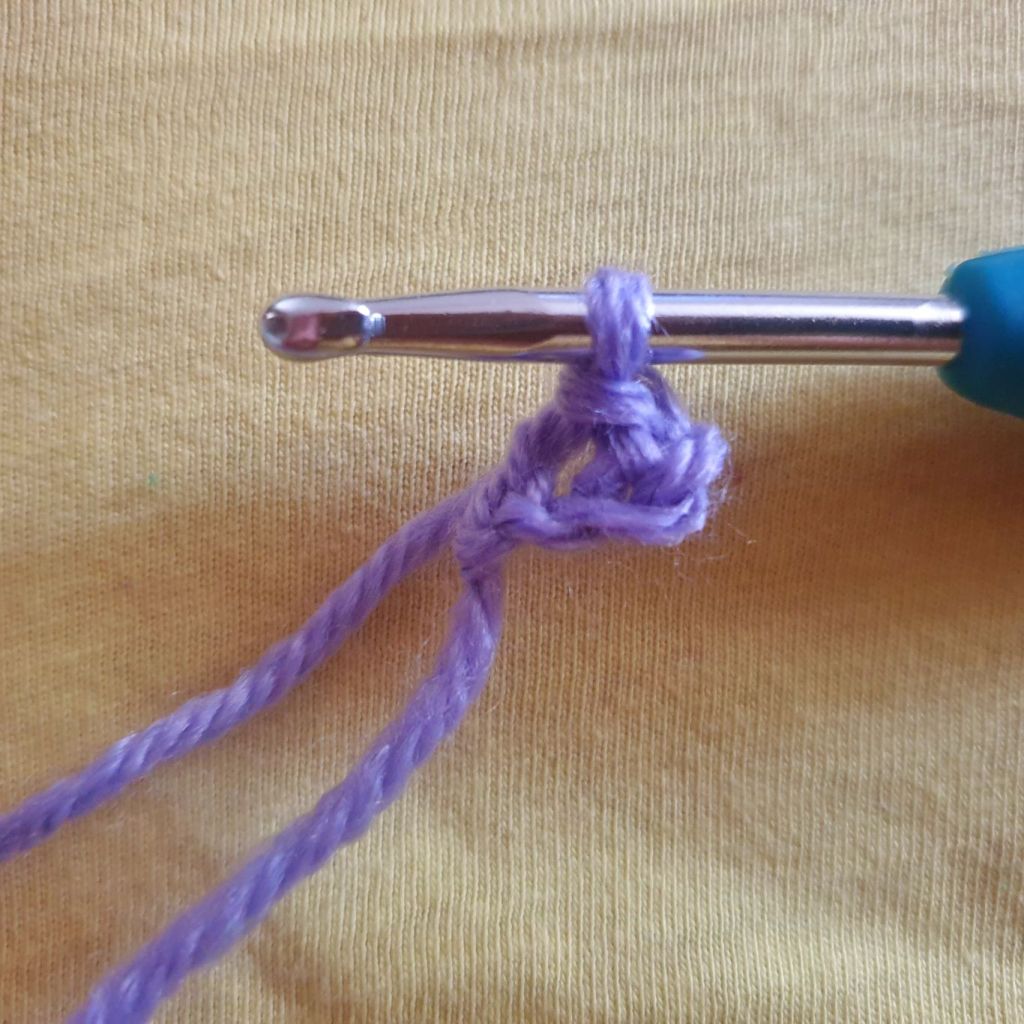
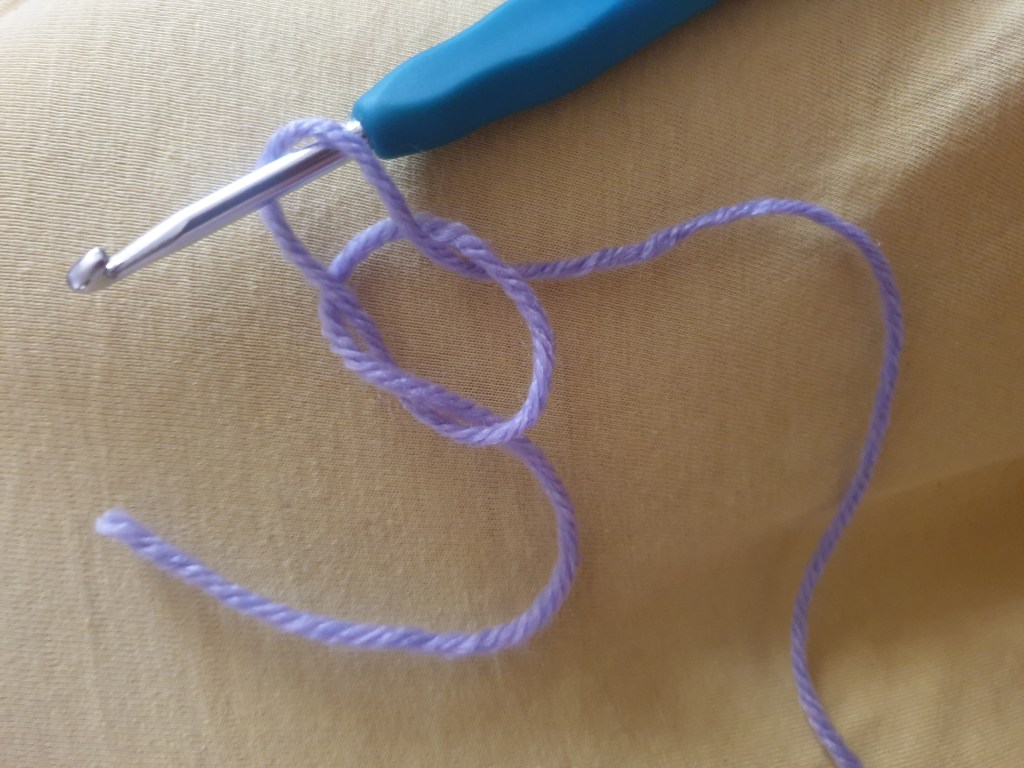
Begin by almost making a slip knot. What I mean is that you leave the knot loose instead of pulling the yarn close to the hook. See the picture below for reference.

A loose slip knot to begin the magic circle.

Now you seal the magic circle by making one chain stitch. See the picture below!

Magic circle plus one chain stitch to seal the circle.

The stitches that are going into the magic circle are called “round one” of the project. If you need to do single crochet (sc) stitches (US terminology) in round 1 then you only need one chain stitch to begin your work. This is because one sc is the height of one chain stitch. Follow the rules for the number of chains you need for a turning chain as mentioned in part 2 of the crochet for absolute beginners tutorial series.

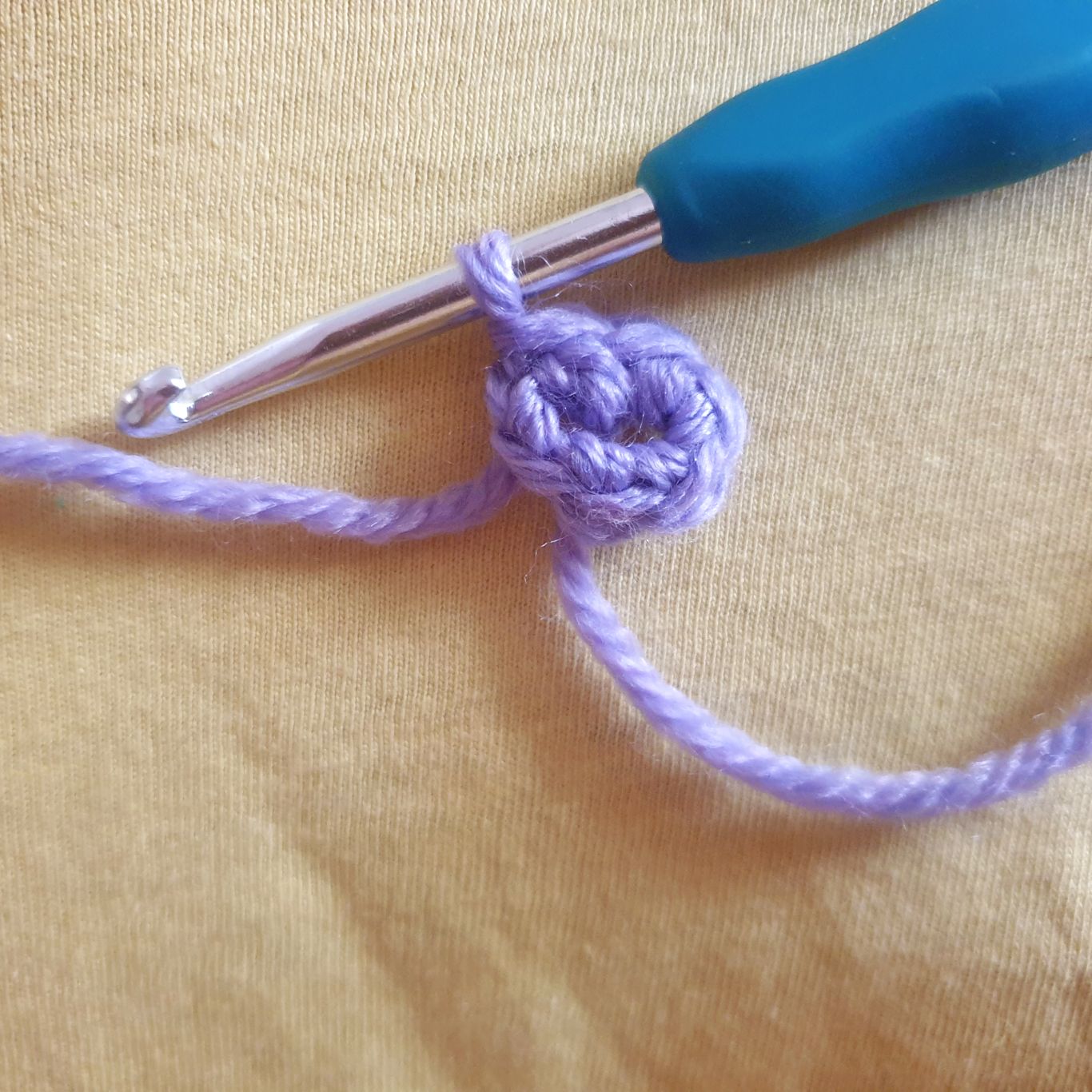
Now you’re going to crochet round 1. In the example below I’ve made 6 sc in the magic circle. The first chain doesn’t count as a stitch in this case.

6 sc in a magic circle.

Here’s the part where it becomes a MAGIC circle. Pull the trailing end of the yarn tail until the circle is drawn tight.

Magic circle with 6 sc pulled tight.

Now you can join the circle together with a slip stitch, unless the pattern says not to join the rounds. Below is a picture of the circle joined with a slip stitch.

Magic circle joined with a slip stitch in the first stitch of the round.

As you work around the circle the centre will become loose unless you secure the tail of the yarn. There are different ways to do it and I’m not quite perfect at it yet but I’m getting there! Here’s my method for securing that circle tightly: Once you’ve completed your work, or when you’re a little bit of the way through, pull the tail of the yarn as tight so that the magic circle is as small as you need it to be. Then use your crochet hook to weave the tail back and forth through the stitches around those first few rounds of the work.

When you want to make perfectly round circles you will need to pay attention to the the number of stitches you work into each round. If you have too many stitches the circles will become ruffled like a chip because all those extra stitches are trying to fit in a smaller space. If you don’t have enough stitches in the round then the work will become bowed and bowl-shaped as the stitches will pull to make the way around the circle.

There’s a mathematical formula to getting the right number of stitches in each round. I won’t go into it here in this post but stay tuned for more crochet tutorials.

Thanks so much for reading!

Visit my store on Storenvy to purchase some of my crochet creations. More items to be added very soon!
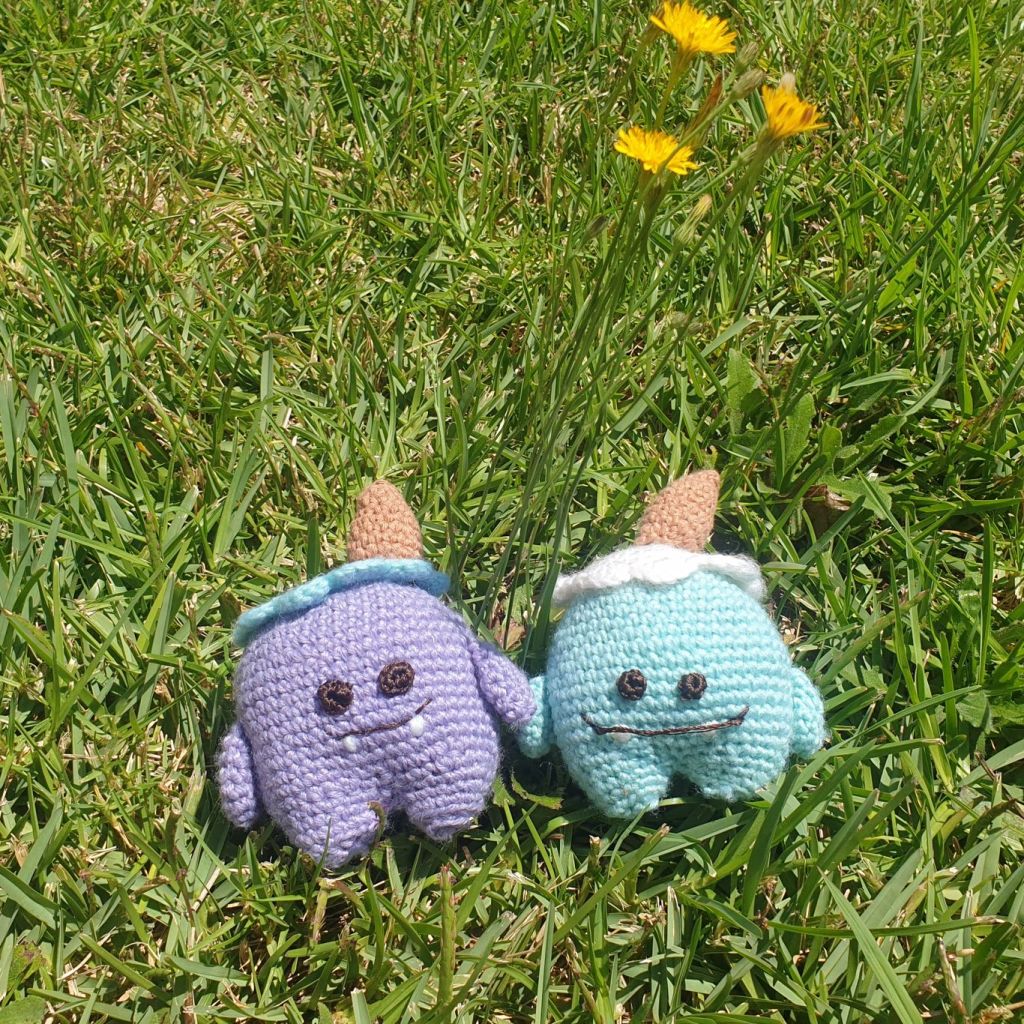
Comment below or email me to request custom coloured ice cream melt monsters. Each individual monster is AUD$25 not including shipping. Extra customisation is available for an additional cost.

Mint choc chip ice cream monster in purple and vanilla ice cream monster in mint. Contact me to request your custom colours. Each individual monster is AUD$25 not including shipping.

How to cultivate success in your life

It took me about a decade but I have finally learned valuable meta-skills such as resilience and self awareness. I’ve also been working on cultivating gratitude and mindfulness which has helped to reduce feelings of anxiety and depression.

Every day, in every way, I’m getting better and better.” –Émile Coué

Here are some tips that you can use to improve your chance for success in life.

“If you correct your mind, the rest of your life will fall into place.” –Lao Tzu.

..Take the opportunity to cultivate a positive mental attitude.

.. Practice gratitude and mindfulness daily so that it becomes a habit. This can prevent anxiety and negative thoughts from holding you back from success.

.. Clearly define your goals. Nebulous goals are a recipe for disaster. Clear goals give you something definite to work towards.

Share your positive habits or any tips for success in the comments below.