With Age Comes Balding

Almost all of us will experience balding in some way, whether we watch someone else struggle with losing their hair or we go through it ourselves. There are many types of hair loss but I want to discuss balding as we age, also known as male and female pattern balding or androgenic alopecia.

Why is it called male/female pattern balding?

Age-related balding happens in a specific pattern in men and women. The pattern of balding is how you diagnose balding and determine whether it’s age-related balding or if it is caused by something else such as fungal infection or medications. Females normally have balding or thinning from the centre part of the scalp and males lose hair from the temples or crown.
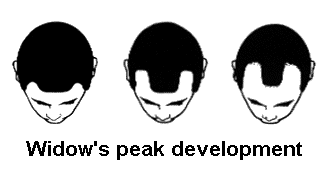
Diagram showing balding from the temples to give the classic widow’s peak. Image source.

What causes balding from age?

Androgens are a type of hormone in the body that are responsible for controlling the male characteristics in both males and females. The word androgen is made up of the latin words for man (andro-) and generator (-gen). Testosterone is an androgen that is made in the testes, ovaries and adrenal glands and it is found in high concentrations in males but in low concentrations in females.

The body converts testosterone into other forms, ie. metabolises the testosterone, with different enzymes depending on which part of the body it is in, the age of the body and also the gender of that body. There isn’t enough known about how the different types of testosterone products interact with the process of making hair follicles in men and women but we do know that no matter how much testosterone you have or don’t have, balding ultimately comes down to your genes.

It’s genetic!

As we age our hair follicles become weaker and produce weaker, thinner, more brittle hair. Then eventually the hair follicle dies and no longer produces hair. People with relatives who experience male pattern baldness are more likely to also experience male pattern baldness themselves.

There is no cure

There are topical treatments for balding to prevent and/or reduce hair loss. These treatments have limited success due to the lack of knowledge regarding the metabolism of testosterone between individuals.

The best way to deal with balding in your life is to assess your own self esteem and feelings of self worth.

Also consider how you feel when you look at a person who is showing signs of balding. Remember that the way you perceive yourself is very different to the way others perceive you. When you look in the mirror be gentle to the friend in the reflection. You are a beautiful person no matter how many working hair follicles you have.

Stay healthy and safe. Reply in the comments with your suggestions for a specific health topic you would like me to cover.

Please visit my YouTube channel for more health tips based in science and subscribe to show your support.

Everyday Hormones That We Experience Every Day

Hormones are signals that tell the organs in your body that it’s time to perform a particular action. For example, when to sleep, when to digest food, when to increase your heart rate and when to feel happy.

Notable hormones for your health throughout each day:

Insulin/Glucagon – Work together to regulate blood sugar concentration.

Leptin/ghrelin – regulate hunger signals. Leptin suppresses hunger signals and makes us feel full. This hormone is controlled by our circadian rhythm (daily cycle) so make sure you’re getting a decent 7 – 9 hours of sleep a night, otherwise your hunger signals will be out of whack. Ghrelin is the hormone that makes us feel hungry. Ghrelin levels increase before a meal to signal when our body requires more food then decrease after we eat so that we no longer feel that hungry feeling in our gut.

Endorphins – You may have heard that exercise brings on a rush of endorphins. This hormone is a natural pain killer and sedative which means it reduces anxiety too. And bonus, it signals your brain to increase serotonin too so you feel happy and calm.

Dopamine – Reward systems in the brain are controlled by dopamine. Repeated rewards lead to reinforcement of the behaviour which lead to the reward, for example when you train an animal with treats you reinforce a particular behaviour because the animal will continue to expect a reward each time. The same goes in our human brain. In this way, dopamine indirectly controls our behaviour and helps us to learn how to relate to the world around us.

Serotonin – Sometimes serotonin is called the happiness hormone because it is known to stabilise mood and make you feel happy. Serotonin is involved in many areas of our physical health including sleep regulation, appetite, communication between brain cells and improved memory and cognition. People with low levels of serotonin can be prescribed anti-depressants that involve keeping serotonin levels stable in the brain.

All of these hormone levels fluctuate throughout each day to keep your body functioning. Knowledge is power, the more you know about the hormones that create signals in the body, the more understanding you have of your own personal health.

Stay safe!

Visit my Youtube channel for more of The Full Cup Wellness

The health benefits of deep restful sleep

Sleep is linked to multiple aspects of our health because it affects different organs and hormone levels throughout the body. Deep restful sleep is also known as slow wave sleep and occurs as the third stage of non-REM sleep. The REM stage of sleep comes after this deep sleep stage. During deep sleep the brain detoxifies itself from harmful proteins that build up during the day and sorts out your recent memories. We cycle through the stages of sleep multiple times during the night. However, people who snore or have sleep apnea are less likely to reach the deeper stages of sleep as they are waking themselves up multiple times during the night.

For the adults, you want to make sure you’re having 7 – 9 hours of sleep each night. Everything is better in moderation. Teens and babies need different amounts of sleep depending on their age.

Less than 7 hours of sleep or poor quality sleep can cause:

Your blood to thin leading to an increased risk of low blood pressure and dizziness. Fewer red blood cells are made so your blood ends up being thinner than it should be.

Reduced cognitive abilities. Lack of sleep can affect you in the same way as too much alcohol. Don’t drive while sleepy, it’s as bad as drunk driving!

Poor memory recall as your recent memories aren’t effectively processed by the brain.

Difficulty in maintaining weight due to disruption of levels of hormones involved in hunger (ghrelin) and feeling full (leptin). Studies have shown that less than 5 hours sleep cause a decrease in leptin levels. This is probably because your body wants to make sure you last the fast of the night but if you have a shorter sleep then your body thinks you need less leptin to keep you feeling full. Unfortunately ghrelin then comes in and makes you feel hungry before a meal. It isn’t affected by your sleep but I have noticed that if I’m not asleep by midnight I get those hunger pains that make it difficult to get to sleep without having a snack first. In the long run it becomes harder to maintain your weight if you’re always eating a second dinner before bed (which was me back in the day when I was up late studying for uni exams).

Lack of deep restful sleep to clear the build up of toxic proteins in the brain that cause Alzheimer’s. Current research indicates that Alzheimer’s might be caused due to build up of tau and amyloid-beta proteins in the brain that are created during the daytime. These proteins are cleared from the brain during deep sleep so it’s very important to deal with insomnia if you can.

Life span can be affected by poor quality sleep. Studies have shown that shift workers may have a decreased life span. Disruption to sleep patterns can cause insomnia as our circadian rhythm is a daily cycle consisting of different hormones released during certain times of the day.

Too much sleep can lead to:

Thicker blood which leads to increased risk of stroke and high blood pressure. More sleep doesn’t necessarily make you feel more refreshed. It can leave you feeling more drowsy if you sleep longer than around 9 hours.

Tricks to beat insomnia:

I know everyone says this one but it’s absolutely true: AVOID CAFFEINE. Caffeine has a lasting effect in the body so limit your intake to the morning and no more than one cup of coffee per day. Black tea contains less caffeine but it’s still there so limit cups of tea or make them weaker.

Blue light filter: Exposure to blue light suppresses your body’s natural melatonin levels. Melatonin is the hormone that increases in your body during the evening, telling your body that it’s time to go to sleep and recharge. The release of melatonin helps to regulate your body’s circadian rhythm and sleep cycles. Blue light is emitted from your TV, computer and smartphone screens. Use the blue light filter function on your smart phone after the sun goes down. You can set them to turn on and off at your chosen times. Personally, my smartphone’s blue light filter is set to switch on at 9 pm and off at 6 am. If your TV, computer or laptop doesnt have a blue light filter function you can purchase blue light filter glasses that look just like regular reading glasses. Search for them online. There are specialty online stores that focus on these light filtering glasses.

Meditations: Yoga nidra for sleep and mindfulness meditation. These types of meditation are like a brain training exercise to keep your thoughts on the present moment. Insomnia can sometimes be caused by us dwelling on the past or worrying about the future. When we’re in the present moment we’re free to control our thoughts into something more productive. Specifically with yoga nidra mediation you will focus on each part of your body individually, making sure it is totally relaxed and ready for sleep. You willl often find that you’re only a quarter of the way through before you fall asleep, it’s surprisingly effective! Give it a go, there are guided meditation tracks online or in my favourite free meditation app Insight Timer.

Supplements: There are some supplements you can purchase from your pharmacy off the shelf. I like velarian root supplements. I’ve also tried melatonin with some success. Personally I haven’t experienced any side effects of using these but ask your doctor for more advice on these supplements and if they’re right for you.

Thank you so much for joining me today. Visit my Youtube channel, QueeenVK, for more Full Cup Wellness.

Keep your cup full!