Unbreakable Fire always in my heart

Good news!

I’ve just registered the domain http://www.thefullcupwellness.com so this website is officially ready to go.

Now you might be wondering why the name change?

For those of you late to the party, this blog was called Unbreakable Fire until this week.

This week I have re-branded as The Full Cup Wellness. I hope you like it!

The Full Cup is a warm and comfortable place to share the best and worst of life.

I believe that knowledge is power against ignorance, ignorance begets hate and fear.

I hope to combat ignorance and share information on stigmatised topics as well as sharing uplifting and helpful information that can contribute to total health and wellness.

Wellness from the inside, out means looking at health as a whole.

Mental health, physical health, emotional intelligence and all that’s in between.

Come with me and let’s get those cups full.

Normal, natural, biological information for all genders

Rejoice! You were born from a menstruating human. This feature of biology is so important for ALL humans of ALL genders to learn so that we can move forward to remove stigma. There is no need for taboo or fear or anger. It’s a regular human function.

the-menstraul-cup-1200x670.jpg
Menstrual cups are used to capture menses (hearts not included)

A quick Biology lesson

Celebrate the fact that the miracle of life stems from such a fascinating and totally normal process. More than half of the population will menstruate during their lifetime. It’s pretty darn cool!

Did you know, other than primates the only other animals that menstruate are bats and elephant shrews? WOW! Other placental mammals (including our pet dogs and cats) undergo oestrus cycles instead of menstruation.

Biology is incredibly fascinating and this knowledge helps us understand how we’re all alive right now. There is nothing scary or wrong with this aspect of reproduction.

Addressing the shame

“It’s crucial that women and girls learn the importance of bodily autonomy and [express] pride, not shame, in their bodies.” – Jessica Schreindl

It’s disheartening and upsetting when menstruating humans are made to feel shame regarding this normal function of life. This is especially true for transgender humans who feel the most pressure to hide any evidence of their menstruation.

Period adverse partners can make navigating periods a challenge but the best and most productive way around this is to speak to them. My partner used to have a very negative view towards periods. He grew up with only brothers! Now he has no problem with periods and took initiative to learn more about the new menstrual cup I bought earlier this year.


If you have a period adverse partner the first step you can take is to introduce conversation of periods like it’s the most normal thing in the world. With confidence and without shame. Share knowledge regarding menstruation in order to remove ignorance. After all, ignorance begets fear and hatred. Combat any fear or ignorance your partner might have towards periods and you’ll be on the right track.

Another group of people who are impacted by the shame surrounding periods is the homeless population. Homeless women and people who menstruate often do not have access to period products. It’s difficult enough to navigate the patriarchy with our periods but for the homeless, it’s near impossible. There are charities that allow us to donate sanitary products to the homeless.

Join me and let’s turn all thoughts and feelings of shame around periods to feelings of PRIDE. Walk proudly to the bathroom holding your pads and tampons. Don’t ever feel like you need to hide the existence of your period.

The way to a more constructive and productive relationship with periods for everybody begins with us breaking the stigma. Keep the conversation going by speaking about your period, your partner’s period, period products and anything that will help with the normalisation of menstruation.


Please comment if you want to know more information. Through education we can remove the ignorance which inevitably leads to prejudice.

Let’s all be PERIOD PROUD together.

Thanks for reading! Here’s a $10 voucher for Thinx period underwear: http://fbuy.me/fUGj2

Raising awareness for invisible illnesses; NEAD Non epileptic attack disorder

Content warning: Sexual assault, emotional abuse, child abuse, trauma.

There are many invisible illnesses out there that many of us have never even heard about. People you pass by daily may be suffering in silence and you wouldn’t have a clue.

Invisible illnesses should be spoken about more frequently to remove any stigma that may surround these disorders. Helping people understand and learn about invisible illnesses or disorders is especially important for the patients as, due to the nature of invisible illness, many people respond with “But you look fine to me”.

Please do not invalidate people who are opening up to you about their illness or experience by saying “But you seem fine” or “but that can’t be true”. It is more damaging to hear those words than you may realise.

Have you ever heard about Non epileptic attack disorder (NEAD) or Psychogenic non-epileptic seizures (PNES)? Me neither! Until now. Let’s absorb some knowledge.

What is it?

PNES are classified as non-epileptic because the seizures are not caused by excessive and abnormal electrical discharges in the brain, which is the case in epilepsy. This does not mean they are any less severe than any other type of seizures. ALL seizures are dangerous and require medical attention.

“Psychological stress exceeding an individual’s coping capacity often precedes PNES/NEAD. Clinicians can find differentiating between PNES/NEAD and epileptic seizures challenging.”(Differentiating between nonepileptic and epileptic seizures, Devinsky et al., 2011).

To diagnose PNES/NEAD medical professionals use video-EEG monitoring. This must be done while typical seizures can be recorded. Video-EEG is the current diagnostic gold standard for PNES/NEAD.

Treatment

Treatment of PNES/NEAD varies depending on the individual patient and can include psychotherapy and use of medications to treat coexisting anxiety or depression.

“A therapeutic technique called Eye Movement Desensitization and Reprocessing works for some people with PNES/NEAD. More research is needed to find additional ways to treat PNES/NEAD.” –Epilepsy foundation.

Why haven’t we heard of it?

Despite being statistically as common as multiple sclerosis, PNES/NEAD can be an uncomfortable condition to speak about as it carries a lot of stigma. It is the psychogenic nature of PNES/NEAD that makes it so difficult to talk about, both for patients and doctors.

Many PNES/NEAD patients are victims of trauma and mental health conditions are still stigmatised, which is why it’s so important to open up the conversation around PNES/NEAD and all forms of mental health.

Some patients of PNES/NEAD are able to identify a specific traumatic event in their life which may have led to the seizures. Treating the trauma as well as the seizures can be a very difficult and slow process. Patience and understanding is very important for healing, both on the part of the medical professional and the patient.

Here is a story from a friend who has been diagnosed with PNES.

This story contains imagery that may be disturbing to some readers.

I guess sharing my story I need to start from when I was 10.
When I was 10, I was frequently sexually assaulted by my neighbour’s son who was 13. No one believed me, but they believed him and took his word against mine. I was too scared to say anything else because one of the people who didn’t believe me was my mother.
My young mind “learned” that the assault was my fault because I was grounded for making up lies and believed I should kill myself. But I was strong enough and a knock to my front door stopped me from suicide.

I bottled this up.

At the age of 18, 8 years after my assault, I was assaulted again, this time by a friend’s step dad. I believed it was my fault that night too. From then I wanted to get help but I was scared of judgment, I was scared of laughter, I was scared because it showed the world that I want help. It showed that I wasn’t scared but embarrassed. Embarrassed of getting help.
Eventually at the age of 21, I asked for help. One good thing I thought I did until my gp said ‘I don’t believe in talking to people you should try medication instead’.
For 2 years it stuck with me. And I bottled it all up. Until I heard about Headspace at the age of 23. It was the best thing I ever did. I’m so glad that it was for free. I was finally able to talk to people about what I was going through mentally.
By the time of 25 I had to leave Headspace as it’s a mental health resource for people under the age of 25. It took me ages to find someone else. Eventually I found a great doctor. And again, thankfully it was a free service. It took me a long time to talk to him and open up about everything. A whole year to be exact. I found a new GP and he has even helped me come so far, breaking my wall down. I opened up to both of them.

Fast forward to the end of 2017.

26/12/2017.
Work found me collapsed. I went to hospital that night. The hospital didn’t know what was wrong until I had a seizure. The hospital staff responded with “Oh its pseudo seizure here talk to our mental health staff to arrange a psychologist.” When I explained to them that I have a regular psychologist they said “OK you’re good to go. I don’t know why the hospital referred you to us. You seem fine.
29/12/2017.
I was back hospital in seizing up. Seizing for hours. But I was fine according to the hospital. Its because I’m depressed, its because of my assaults, its because I’m suffering anxiety that they won’t do anything.
Present day:
I have an answer, a diagnosis, of pseudo seizures. I’m still being judged. The people around me and their responses it makes it so difficult to open up to people. It makes it harder to receive help from mental health doctors because people put it in your head that “you’re fine”, “other people are worse off” or they say “you don’t look sick”, “why don’t you work?” and “Stop faking”. The doubt and the disbelief are so damaging to people like us. It’s those words that make it hard for us to talk to people.
I’ve found out recently that my brain is fine and I should stress less. I’m not even stressed, why tell me that I am? People are willing to blame it on my past. And if I have pseudo seizures why don’t I end up in a psych ward? Or is it because I’m normal compared to the people in those wards? All I want to do is get help from someone. Someone who doesn’t charge out of this world, to see someone who can help me, so I can become normal again and live my life without fearing the worst.
Its just amazing how people treat me different when I say I have it. Including now my own family. Its heartbreaking. I just wish I was normal. I wish I didn’t have these seizures.
———————————————————–
If you think you may be suffering from PNES or would like more information on anything you have read in this post please contact us.

Five ways to increase your metabolism

Do you have a slow, sluggish metabolism impacting on your overall health?

Thankfully there are a few ways you can increase your metabolic rate.

Your metabolic rate is the number of calories you burn in a given amount of time, also known as calorie expenditure. The faster your metabolism, the more calories your body needs to function. So, how can we speed it up?

1. Strength train

The effect of exercise itself will increase your metabolism but if you also combine this with strength training exercises it will lead to the growth of muscle mass. The amount of muscle you have is directly associated with your metabolic rate. More muscle equals a higher resting metabolism, that is, metabolic rate when the body is at rest. Muscle loss is often associated with older age or a calorie-reduced diet. It’s important to continue promoting the growth of muscle mass so you are able to increase your resting metabolism which will significantly allow your body to burn more calories.

2. Move your body

Those very basic day to day activities such as standing up regularly, doing household chores, taking the stairs instead of the elevator or even fidgeting all count as getting your body moving! This particular boost in metabolic rate is known as non-exercise activity thermogenesis (NEAT). In severely obese individuals, NEAT can account for a considerable portion of the daily calorie expenditure. Although the recommendation of moderate intensity physical exercise is 30 minutes per day, even light activities like walking around or your household work will boost your metabolism which is going to give you an advantage in the long run.

3. Do high intensity workouts

One of the most effective forms of exercise is high-intensity interval training (also known as HIIT). HIIT is a form of interval training which incorporates short bursts of workouts at intervals of often little rest in between. The positive effects of HIIT on your metabolism remain long after the workout is complete.

Try this HIIT workout and let us know how you go!

200m sprint (run or row)

20 kettlebell swings

15 box jumps

10 push press

5 burpees

30 seconds rest

Repeat 4 times

4. Eat protein

Eating sufficient amounts of protein is essential if you want to maintain or build your muscle mass. There are also many other health benefits of eating protein in your daily food consumption. All food leads to a temporary increase in metabolic rate however, this effect is much stronger after eating protein than after eating fats or carbs. Protein actually increases metabolic rate by 20–30% verses carbs and fat which only increases it by 3–10%.

5. Drink green tea

The benefits of consuming green tea are well known. Not only does it contain antioxidants aplenty and various nutrients it also boosts metabolism quite effectively. Studies have found that the consumption of green tea is associated with weight loss, especially around the belly. There are polyphenolic compounds called catechins present in green tea which stimulate fat oxidation and boost energy expenditure. This effect is even stronger when combined with exercise.

If you don’t enjoy the taste of green tea, or want to give your body a real boost, I recommend Tegreen capsules which contain the equivalent of 6 cups of green tea in one capsule. You gain all of the beneficial properties of green tea without burning your mouth on a cup of steaming hot tea.

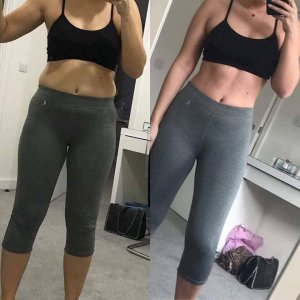
I love receiving feedback because it’s so valuable! Here are some Tegreen (plus exercise) Before and After shots.

Note that belly fat is reduced by using Tegreen in conjunction with exercise as the boost in metabolism from the tea assists with extra expenditure of calories during exercise.

Comment below or send me an email at fullcupwellness1@gmail.com to find out more information about supplementation with green tea and to place an order for Tegreen. Mention this post for 15% off all TeGreen supplement purchases.

Plant a tree without planting a tree

You can now plant a tree and help the planet without even getting your hands dirty.

I have often thought about planting a tree but I have no idea how or where to do it with permission. My small apartment balcony is hardly the place for a tree!

There are currently a bunch of companies that plant at least one tree per purchase of their products or services. Here are some of them:

Tree Lyfe

“Live every day with intention.
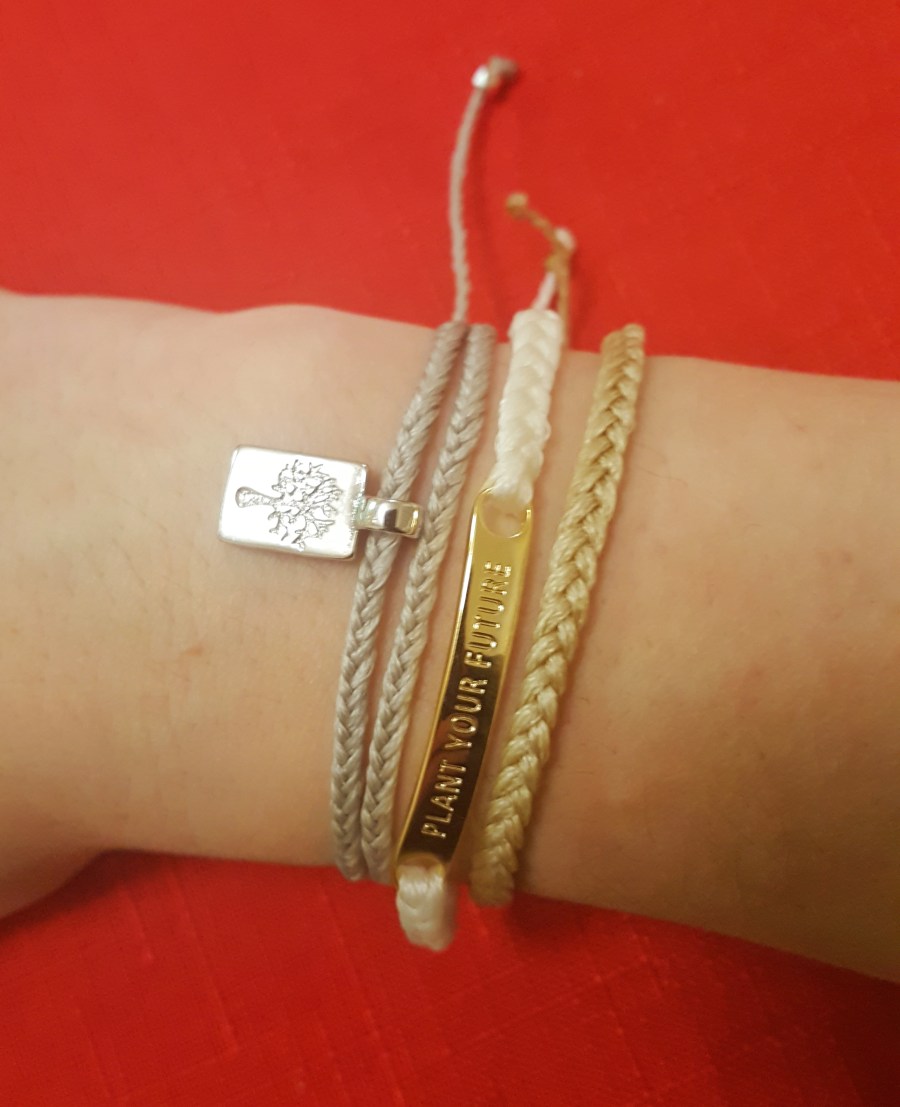
Wear our bracelets as a reminder that you have the ability to create your own reality. #plantyourfuture
Each bracelet plants a tree and is a daily reminder that you too can reach incredible heights.”

So far Tree Lyfe has planted around 12,000 trees. They are planted in Haiti, Madagascar, Ethiopia, Nepal, and Indonesia. Local workers from these poverty-stricken countries are hired and trained to plant the trees, providing jobs which help lift the families from poverty. The local families then benefit as the workers can provide food, education, and health care for their families.

In addition to the benefit to the environment Tree Lyfe also has a focus on mental health.
I’m all for breaking taboos around mental health and keeping the conversation open around mental health in order to reduce stigmatisation. It’s a cause close to my heart.
Each bracelet stands for more than one planted tree. It serves as a reminder of our own personal growth that can grow along with the tree that was planted with the purchase of the bracelet.
Scroll down for my Tree Lyfe review.

Ten Tree

At tentree, our goal is to become the most environmentally progressive brand on the planet. We don’t want to just reduce the negative impact of the apparel industry, we want to use it as a vehicle for change. Our purpose is to revitalize our environment and inspire a generation to believe that they can do the same.

Baron Fig

Buy a Book, Plant a Tree endeavour is our way of giving back in appreciation. It’s our way of showing thanks to you, our customers, as well as to the environment. So far your purchases have helped plant tens of thousands of trees since we launched, with more being added to that number daily. For every Confidant you buy, we’ll plant a tree.

WeWOOD

High-quality and eco-friendly timepieces that give back to the environment. For each watch sold WeWood plants one tree allowing our customers to not only look stylish in their new WeWood accessory but help the environment.

4EST Shades

At 4EST Shades we fell in love with the idea of crafting beautiful products from sustainable materials. Our dream resulted in the creation of this wonderful collection of sunglasses. We are also dedicated to giving back, so with every purchase made we donate to have two trees planted. Rest assured you won’t only look good, you can feel great knowing you’ve helped make for a greener Earth!

Review time

I gave Tree Lyfe a go and I am pleasantly surprised with the products I have received.

The quality of each woven bracelet exceeds expectations and the size of the bracelet is very easily adjustable to allow a perfectly comfortable fit.

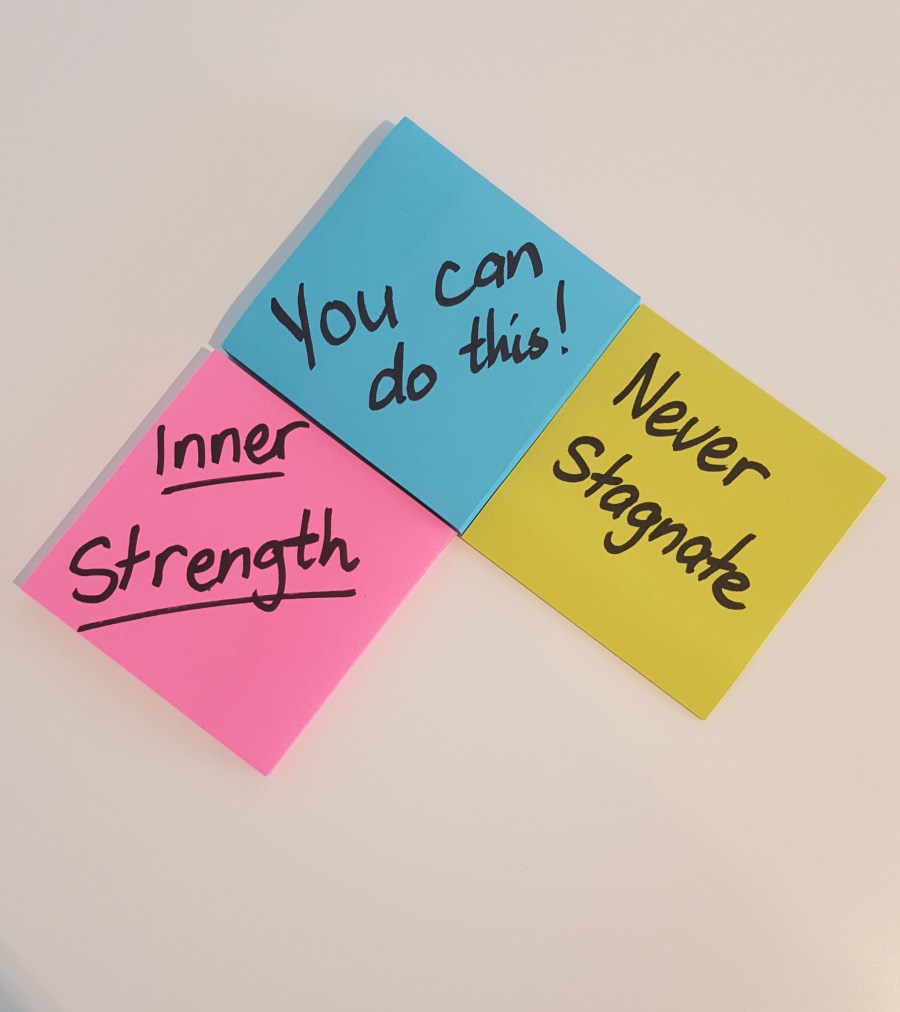
Each sticker and bracelet provides a person with motivation and positivity, which is exactly what I feel I need in my life especially this week in particular. Every time I look down and see these trendy pieces on my wrists I feel a boost of inspiration and sometimes that’s all we need to keep us going.

In regards to keeping up the conversation around mental health awareness, check out the Tree Lyfe website for the Inspiring Stories from young people who have shared their own personal traumatic experiences. These personal stories can help inspire us to keep going through those challenging times in our life.

Tree Lyfe is offering a 10% discount on all purchases through this affiliate link or it’s as easy as using the code FULLCUP10 at the checkout.

How thankful are you?

Practicing gratitude can be challenging on those days you want to curl up and completely shun the world. Sometimes it takes a boost of gratitude to help you get out of a slump. Gratitude for yourself, for others, for the world. Yes, even gratitude for your enemies.

Gratitude meditation can be considered one of the most simple ways to meditate. You can try it at any time and anywhere. All you need to do is reflect on all of the people and things that you are grateful for.

As Jack Kornfield says:

Open the meditation to include neutral people, difficult people, and even enemies- until you extend sympathetic joy to all beings everywhere, young and old, near and far.”

Benefits of Gratitude Meditation

You may be skeptical but there are many benefits to invoking feelings of gratitude.

  • Decreased levels of depression(Sirois, 2017 Gratitude Uniquely Predicts Lower Depression in Chronic Illness Populations)
  • Greater feelings of well-being (Nezlek, 2017 A daily diary study of relationships between feelings of gratitude and well-being)
  • Trust in social situations with strangers (Drążkowski, 2017 Gratitude pays: A weekly gratitude intervention influences monetary decisions, physiological responses, and emotional experiences during a trust-related social interaction)
  • Greater sleep quality (Jackowska, 2016: The impact of a brief gratitude intervention on subjective well-being, biology, and sleep)
  • Reduced levels of stress and increased happiness (Kyeong, 2018 Effects of Gratitude Meditation on Neural Network Functional Connectivity and Brain-Heart Coupling)


Here is an easy 10 minute meditation to wake up with which will help you start your day in a more positive way.


This guided gratitude meditation is just over 10 minutes long and you can listen to it wherever you like whether you’re on the train or bus on the way to work or just beginning your day.

https://youtu.be/nCq5MkNem6k


How are gratitude and mindfulness linked?

Mindfulness is all about being aware without judgement of your thoughts. Try to observe your surroundings and also your internal mental state with compassion, without judgement.

I found it very useful to treat mindfulness as brain training. You can train your brain to stop reacting to negative situations with irritation and frustration. Expressing irritation and frustration will always lead to negative outcomes. Consider all of the times you showed irritation and how it worsened the situation. If we train ourselves to react with compassion and acceptance those negative moments become so much more bearable.

As written by Williams and Penman (2012), mindfulness can prevent the relapse of depression and I have definitely felt this in my personal experience. My depression and anxiety has become manageable and bearable thanks to the brain training towards a mindfulness mentality.

Feelings of sadness and pain are part of the normal human experience. However, our mental health is affected by the frustration with which we reaction to that sadness and pain. Sadness can cause a person to react with frustration. That frustration leads to more sadness. That sadness brings about more feelings of frustration that feeds the negative spiral downwards into depression.

The downward depression spiral can be stopped! There is hope. If we don’t react to negative emotions with irritation and frustration, but instead with compassion and acceptance, we can stop spiralling and become more productive.

“Once you’ve felt [negative emotions], acknowledge their existence and let go of the tendency to explain or get rid of them, they are much more likely to vanish naturally, like the mist on a spring morning.” -Williams and Penman, 2012

Acknowledge and accept the existence of your sadness and anger; then let them fade away. It’s just a moment in the span of your existence. Moments of pleasure don’t last just as moments of sadness don’t last. As long as you don’t feed them.

Happiness isn’t a life free of irritation and negativity. Happiness is a life where negativity and irritation aren’t fed and strengthened, they are acknowledged and accepted with humility.

“You can’t stop the triggering of unhappy memories, negative self-talk and judgmental ways of thinking -but what you can stop is what happens next. You can stop the vicious circle from feeding off itself and triggering the next spiral of negative thoughts.” -Williams and Penman, 2012

The next time you feel negativity bubbling up during a moment of vulnerability or desperation, do not get frustrated at yourself or at external factors, just take a deep breath and patiently acknowledge the experience, observe it as it simply fades away.

Gratitude makes it possible to notice the positive blessings around us and removes our thoughts from the difficulties we’re facing in this life. Mindfulness helps us react to our misfortunes with acceptance and humility.

Life is difficult enough for all of us, let’s not make it harder.

Where to find your motivation

How do you keep going when you’re only halfway through your workout and feel yourself slipping? Where do you find the drive to keep going after an entire day of work then coming home only to cook and clean? How do you find the inner strength to continue job hunting following rejection after rejection?

When you’re running low on motivation what do you do to keep going?

Whether you think you can or you think you can’t, you’re right. –Henry Ford

Henry Ford may be on to something here. When you start believing that you can’t do it you’ve already begun to fail. The power of suggestion is stronger than many people realise. Even if it’s yourself that is doing the suggesting.

But then how do we get out of a rut? Or a slump? Or a pool of stagnant water that is the metaphor for your current career situation?

Remember, we all face obstacles. It’s how you approach them that sets you apart.

The most productive way to face an obstacle is to identify what the true, deeper cause is, ask yourself what is the real de-motivator in your personal situation?

Fear

We can most easily lose motivation through fear (also recognised as anxiety). To get through this obstacle, address the fear, acknowledge your fear or fight/flight response is trying to protect you. Give it a little nod of thanks for trying to protect you, after all, your anxiety means well. Then question your fears by asking why. Why am I afraid to ask for the promotion at work? Why am I afraid to start training for the marathon?

Setting the wrong goals

When we set the wrong goals we rapidly lose motivation. Think about the goals you made back in the new year. Were the too big? Were they too vague? Tackle smaller goals to lead to your final outcome and you’ll keep up that momentum with ease, especially when you see all of the milestones you’ve been reaching. Each small victory can spur you on to the next one.

If your goals are vague and lack clarity you risk not having a clear plan to move forward. An easy fix is to reframe and review your goals so that you have a defined path to follow. If your plan is “lose weight” try and make it more clear by setting a weekly or monthly weight target. If your plan is to “run a marathon” start by setting small training goals such as a defined distance per week. Adjust your goal to your personal situation and resources and you are already on the path to success!

Burn out

You might be smashing out goal after goal and reframing, reassessing your goals as needed but then you suddenly crash. We can lose momentum or completely collapse if we don’t look after our physical, mental, emotional health while we’re working so hard. With a lack of self care we run the risk of burning out. Too exhausted? Grieving? Giving too much of yourself? Allow yourself time to slow down, grieve and recover. We’re human and other humans will understand if you need to pull back just a bit, before setting off again towards those important goals.

Boredom

It’s easy to forget that a lack of challenge can sap our motivation. We get bored when we’re no longer challenged. Have you become autonomous with a new skill? Challenge yourself, learn a new skill, advance your current skills, aim for a higher level. Always review your goals.

Mindset

A negative mindset is like poison. Consider the Henry Ford quote again. If you believe you’ll fail you’ve already set yourself up for failure. If the reason you’re no longer utilising your pricey gym membership is because you’ve convinced yourself you’re too tired or drained, try to reframe your thoughts and your mindset. Remind yourself of all of the positives, the benefits, the pros to getting up earlier or getting home later after a gym session. This can spark motivation. If you don’t have an already diagnosed health reason for feeling too tired and drained to attain those goals then you’ve just cheated yourself by making an excuse. Future you will thank you for the positive mindset!

If your goals are making you feel tired just by thinking about them that’s a sign that you need to cultivate a positive mindset. Perhaps it’s a combination of the above de-motivators. Feeling too lethargic to take action towards your goals can also indicate you’re bored, burnt out or that your goals lack clarity.

Take the time to listen to what your mind is really telling you, then go for gold.

The positive potential

The potential for meditation to assist people with many different ailments is enormous. People can turn to meditation for respite from anything including insomnia, anxiety, depression, chronic pain and addiction.

The positive mindset that meditation can bring seems to do so much good when we are experiencing such difficulty. Practising mindfulness through meditation has helped so many people move forward through the lowest points in their life in order to find the strength to carry on.

I’d love to share with you the experience of a friend who suffers from Crohn’s Disease, a chronic inflammatory bowel disease that affects the lining of the digestive tract. It’s very painful and like many chronic illnesses it can prevent the person from working, or working as much as someone without a chronic illness which, as most of you know, can have a negative impact on every aspect of a person’s life (depression, stress, financial burden).

Here is Stuart’s story in his own words:

My life with mediation

My stress levels have been the biggest change with reducing stress due to the help of meditating…

Meditation has also changed the way I look at life as well the surroundings around me and understanding my own body…

My life has been a roller coaster since dignosed with a chronic illness which had taken over my self esteem but a close friend suggested to try meditation. After 8 months of self meditation my self confidence has been at a high and this helped me to deal with a chronic illness, Crohn’s Disease.

To control the mind and body through meditation and to do deal with the outcomes crohns throws at myself well it’s helped with the changes my body develops on a scale where its believed hard but mediation can bring happiness, self belief and self confidence.

If you have used meditation to help you through any difficulty in your life please comment below and tell us your story.

My case for bringing back the humble hanky

71P5s4-HeGL._UX679_.jpg

When my mother offered me a stack of hankies from my late grandmother I, the young person I was, recoiled and immediately declined to accept the small squares of fabric. I thought that tissues were the way to go. They are, as it currently seems, the more socially acceptable item to use.

It wasn’t until I looked into blogs written by people living a waste-free life that I realised just how many tissues I discard on the regular. The beginning of my reduction of waste adventure has involved always taking reusable canvas bags when I go shopping, purchasing a small compost bin for my apartment, and turning some old clothes into hankies.

Yes, I found a worn out, hole-y old tank top to repurpose into hankies. I wonkily cut and sewed the soft stretchy fabric and now I have 2 extra hankies that are very effective. Especially since the fabric is so soft, it’s a relief to use them on the delicate skin on the face!

I was so excited about my little waste-reduction project that I called up my mum and asked for those lovely vintage hankies that have been sitting in storage. Then I began keeping at least one in my handbags, my work bag, my bedside table.

For almost anything that you would otherwise use a tissue, a hanky can be a substitute. And a very worthy substitute it is. I haven’t spent money on tissues (the cost of those little travel packets I kept in all my bags adds up!), cleaning up around the bathroom sink is an absolute breeze and they make the best napkins for a messy eater like myself.

It’s true, tissues can be composted but if you can reduce the waste you’re producing by making a small change here and there I say, why not go for it?


28267aeee1f4c78694e5a5de36f95620.jpg

The key to longevity

Caloric restriction has been touted as the best way to achieve a longer lifespan. Diets that involve calorie restriction include the CR (Calorie Restriction) diet, 5:2 diet and intermittent fasting.

Recent scientific publications and articles have outlined the way a diet that involves some form of fasting can benefit the human body.

A quote from one of the articles concludes with:

Longevity in humans is still an unpredictable by-product of our myriad variations in individual biology, behavior and circumstance. The objective, according to researchers, is merely to make the healthy portion of our lives last longer.

So although caloric restriction is only one small part of the bigger picture for your total individual health over the span of your lifetime it is a potential change you can make in your life.

Some tips for trying out a caloric restrictive diet:

  • Limit alcohol consumption as we often forget that alcohol contains a lot of empty, nutritionless calories. This is true for all types of alcohol!
  • Meals that contain a higher percentage of protein will make you feel more full. Carbs are great as fillers but protein is best for those lower calorie “fasting days”.
  •  Utilise those free calorie counting apps such as S Health which is compatible with Samsung devices or My Fitness Pal which is great for iPhone users.
  • Meal replacement products are often formulated to be high in protein and will help you feel full without going over your calorie limit.

If you’re interested in trying out some metabolism boosting supplements and meal replacement shakes that will assist in a calorie restrictive diet please comment below or contact me for more information!