How thankful are you?

Practicing gratitude can be challenging on those days you want to curl up and completely shun the world. Sometimes it takes a boost of gratitude to help you get out of a slump. Gratitude for yourself, for others, for the world. Yes, even gratitude for your enemies.

Gratitude meditation can be considered one of the most simple ways to meditate. You can try it at any time and anywhere. All you need to do is reflect on all of the people and things that you are grateful for.

As Jack Kornfield says:

Open the meditation to include neutral people, difficult people, and even enemies- until you extend sympathetic joy to all beings everywhere, young and old, near and far.”

Benefits of Gratitude Meditation

You may be skeptical but there are many benefits to invoking feelings of gratitude.

  • Decreased levels of depression(Sirois, 2017 Gratitude Uniquely Predicts Lower Depression in Chronic Illness Populations)
  • Greater feelings of well-being (Nezlek, 2017 A daily diary study of relationships between feelings of gratitude and well-being)
  • Trust in social situations with strangers (Drążkowski, 2017 Gratitude pays: A weekly gratitude intervention influences monetary decisions, physiological responses, and emotional experiences during a trust-related social interaction)
  • Greater sleep quality (Jackowska, 2016: The impact of a brief gratitude intervention on subjective well-being, biology, and sleep)
  • Reduced levels of stress and increased happiness (Kyeong, 2018 Effects of Gratitude Meditation on Neural Network Functional Connectivity and Brain-Heart Coupling)


Here is an easy 10 minute meditation to wake up with which will help you start your day in a more positive way.


This guided gratitude meditation is just over 10 minutes long and you can listen to it wherever you like whether you’re on the train or bus on the way to work or just beginning your day.


How are gratitude and mindfulness linked?

Mindfulness is all about being aware without judgement of your thoughts. Try to observe your surroundings and also your internal mental state with compassion, without judgement.

I found it very useful to treat mindfulness as brain training. You can train your brain to stop reacting to negative situations with irritation and frustration. Expressing irritation and frustration will always lead to negative outcomes. Consider all of the times you showed irritation and how it worsened the situation. If we train ourselves to react with compassion and acceptance those negative moments become so much more bearable.

As written by Williams and Penman (2012), mindfulness can prevent the relapse of depression and I have definitely felt this in my personal experience. My depression and anxiety has become manageable and bearable thanks to the brain training towards a mindfulness mentality.

Feelings of sadness and pain are part of the normal human experience. However, our mental health is affected by the frustration with which we reaction to that sadness and pain. Sadness can cause a person to react with frustration. That frustration leads to more sadness. That sadness brings about more feelings of frustration that feeds the negative spiral downwards into depression.

The downward depression spiral can be stopped! There is hope. If we don’t react to negative emotions with irritation and frustration, but instead with compassion and acceptance, we can stop spiralling and become more productive.

“Once you’ve felt [negative emotions], acknowledge their existence and let go of the tendency to explain or get rid of them, they are much more likely to vanish naturally, like the mist on a spring morning.” -Williams and Penman, 2012

Acknowledge and accept the existence of your sadness and anger; then let them fade away. It’s just a moment in the span of your existence. Moments of pleasure don’t last just as moments of sadness don’t last. As long as you don’t feed them.

Happiness isn’t a life free of irritation and negativity. Happiness is a life where negativity and irritation aren’t fed and strengthened, they are acknowledged and accepted with humility.

“You can’t stop the triggering of unhappy memories, negative self-talk and judgmental ways of thinking -but what you can stop is what happens next. You can stop the vicious circle from feeding off itself and triggering the next spiral of negative thoughts.” -Williams and Penman, 2012

The next time you feel negativity bubbling up during a moment of vulnerability or desperation, do not get frustrated at yourself or at external factors, just take a deep breath and patiently acknowledge the experience, observe it as it simply fades away.

Gratitude makes it possible to notice the positive blessings around us and removes our thoughts from the difficulties we’re facing in this life. Mindfulness helps us react to our misfortunes with acceptance and humility.

Life is difficult enough for all of us, let’s not make it harder.
The shame of being medicated

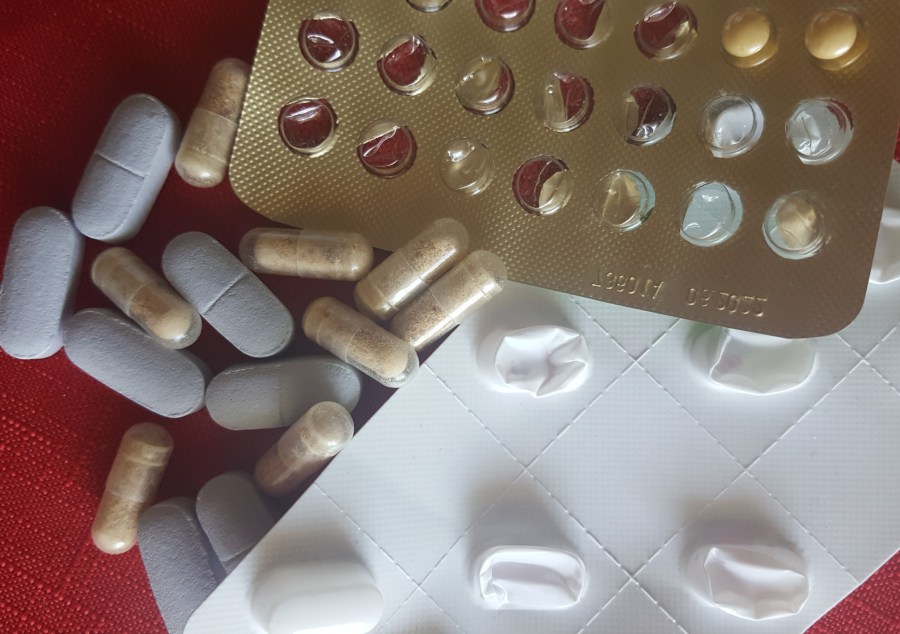
To remove the stigma around taking medication we should begin by opening up the conversation of mental illness and the treatment of that illness. The taboo around taking medication can cause many people feel that they are unable to go to the doctor for help or are unaware of the help that is available to them. It can even prevent a person from taking the medication that is prescribed to them.

For years I didn’t know I needed antidepressant medication. I didn’t even know I had PMDD (premenstrual dysphoric disorder. Think PMS but on steroids). When I finally found the courage to speak to a doctor about my symptoms I received a diagnosis. After more than 15 years of struggling through the symptoms I finally had an answer! At first I avoided buying the prescribed Zoloft by trying out naturopathic remedies. However, the nature of my disorder is too severe and pharmaceutical antidepressants are required.

I prefer to be open and honest with people about my condition and the treatment because if we don’t speak about these topics then the stigma will always remain. Women who have undiagnosed PMDD may benefit from learning that such a condition exists! People who don’t have the disorder can have a better understanding of what symptoms and side effects that patients of the disorder encounter. This is true for all illnesses that are not well understood.

To help others see that there does not need to be a stigma around taking medication I love this analogy of comparing medication to eyeglasses.

A person can live their life with blurry vision, not knowing they need glasses. Life can be difficult when living with poor eyesight and the person may struggle significantly until they find out they need glasses. Once they are prescribed a pair of glasses life is much easier and clearer.

If we consider the same for medication, it doesn’t seem so scary or taboo. We just need to put our glasses on every morning (or with meals or before bed).

If we don’t open up the conversation about mental health then nothing will change.

Please comment below with your experiences with mental health and medication. #breakthetaboo

Where to find your motivation

How do you keep going when you’re only halfway through your workout and feel yourself slipping? Where do you find the drive to keep going after an entire day of work then coming home only to cook and clean? How do you find the inner strength to continue job hunting following rejection after rejection?

When you’re running low on motivation what do you do to keep going?

Whether you think you can or you think you can’t, you’re right. –Henry Ford

Henry Ford may be on to something here. When you start believing that you can’t do it you’ve already begun to fail. The power of suggestion is stronger than many people realise. Even if it’s yourself that is doing the suggesting.

But then how do we get out of a rut? Or a slump? Or a pool of stagnant water that is the metaphor for your current career situation?

Remember, we all face obstacles. It’s how you approach them that sets you apart.

The most productive way to face an obstacle is to identify what the true, deeper cause is, ask yourself what is the real de-motivator in your personal situation?

Fear

We can most easily lose motivation through fear (also recognised as anxiety). To get through this obstacle, address the fear, acknowledge your fear or fight/flight response is trying to protect you. Give it a little nod of thanks for trying to protect you, after all, your anxiety means well. Then question your fears by asking why. Why am I afraid to ask for the promotion at work? Why am I afraid to start training for the marathon?

Setting the wrong goals

When we set the wrong goals we rapidly lose motivation. Think about the goals you made back in the new year. Were the too big? Were they too vague? Tackle smaller goals to lead to your final outcome and you’ll keep up that momentum with ease, especially when you see all of the milestones you’ve been reaching. Each small victory can spur you on to the next one.

If your goals are vague and lack clarity you risk not having a clear plan to move forward. An easy fix is to reframe and review your goals so that you have a defined path to follow. If your plan is “lose weight” try and make it more clear by setting a weekly or monthly weight target. If your plan is to “run a marathon” start by setting small training goals such as a defined distance per week. Adjust your goal to your personal situation and resources and you are already on the path to success!

Burn out

You might be smashing out goal after goal and reframing, reassessing your goals as needed but then you suddenly crash. We can lose momentum or completely collapse if we don’t look after our physical, mental, emotional health while we’re working so hard. With a lack of self care we run the risk of burning out. Too exhausted? Grieving? Giving too much of yourself? Allow yourself time to slow down, grieve and recover. We’re human and other humans will understand if you need to pull back just a bit, before setting off again towards those important goals.

Boredom

It’s easy to forget that a lack of challenge can sap our motivation. We get bored when we’re no longer challenged. Have you become autonomous with a new skill? Challenge yourself, learn a new skill, advance your current skills, aim for a higher level. Always review your goals.

Mindset

A negative mindset is like poison. Consider the Henry Ford quote again. If you believe you’ll fail you’ve already set yourself up for failure. If the reason you’re no longer utilising your pricey gym membership is because you’ve convinced yourself you’re too tired or drained, try to reframe your thoughts and your mindset. Remind yourself of all of the positives, the benefits, the pros to getting up earlier or getting home later after a gym session. This can spark motivation. If you don’t have an already diagnosed health reason for feeling too tired and drained to attain those goals then you’ve just cheated yourself by making an excuse. Future you will thank you for the positive mindset!

If your goals are making you feel tired just by thinking about them that’s a sign that you need to cultivate a positive mindset. Perhaps it’s a combination of the above de-motivators. Feeling too lethargic to take action towards your goals can also indicate you’re bored, burnt out or that your goals lack clarity.

Take the time to listen to what your mind is really telling you, then go for gold.

The positive potential

The potential for meditation to assist people with many different ailments is enormous. People can turn to meditation for respite from anything including insomnia, anxiety, depression, chronic pain and addiction.

The positive mindset that meditation can bring seems to do so much good when we are experiencing such difficulty. Practising mindfulness through meditation has helped so many people move forward through the lowest points in their life in order to find the strength to carry on.

I’d love to share with you the experience of a friend who suffers from Crohn’s Disease, a chronic inflammatory bowel disease that affects the lining of the digestive tract. It’s very painful and like many chronic illnesses it can prevent the person from working, or working as much as someone without a chronic illness which, as most of you know, can have a negative impact on every aspect of a person’s life (depression, stress, financial burden).

Here is Stuart’s story in his own words:

My life with mediation

My stress levels have been the biggest change with reducing stress due to the help of meditating…

Meditation has also changed the way I look at life as well the surroundings around me and understanding my own body…

My life has been a roller coaster since dignosed with a chronic illness which had taken over my self esteem but a close friend suggested to try meditation. After 8 months of self meditation my self confidence has been at a high and this helped me to deal with a chronic illness, Crohn’s Disease.

To control the mind and body through meditation and to do deal with the outcomes crohns throws at myself well it’s helped with the changes my body develops on a scale where its believed hard but mediation can bring happiness, self belief and self confidence.

If you have used meditation to help you through any difficulty in your life please comment below and tell us your story.

Starting a business from scratch

People who have started their own business all have different reasons for doing so. The reasons span from wanting the flexibility to work from home, wanting to be your own boss and even chronic illness preventing a person from working in a particular work environment.

You start your business with a plan in mind, if you’re doing it right. You begin with your plan and you jump right in without fear.

That’s a lie. You might be totally fearful, anxious at whether this will all work out, worried about the risks or money put into an idea that might or might not be successful.

Here I am, beginning my business on Facebook with The Full Cup Wellness with minimal resources. As you can see on the Facebook page I started with a photo of my cup of tea and a picture of me posting with that same mug (although it was filled with coffee that time!). Then I used a free photo editing app and, with my complete lack of editing skills, I made the following profile picture:

37829707_1813176988768144_5160228808996945920_n.jpg

Sure it’s not an artwork worthy of a prize in an art gallery but it’s handmade with love using the resources I have at hand. Those resources just happen to include my utter lack of design skills and my poor quality camera on my phone.

Please share your business page in the comments below and allow us to like, follow and support your business. Because supporting each other is the way to go. Competitiveness might get you further in some situations but I believe it’s much easier, better, more rewarding to lift each other up in our endeavours.

If you’re just starting out with a brand new business idea post your motivation below so we can understand more about your “why”.

And if you’ve been considering a new business venture but are unsure where to start please contact me for an opportunity that doesn’t require any start up costs, no ongoing fees, no kits to buy and continuous ongoing support and training.

Keeping your cup full

There are a few reasons why I’ve named my new Facebook business page The Full Cup.

The main idea is that I wanted to invoke feelings of positivity and optimism. The cup is all the way full instead of half full/half empty.

There’s also that familiar comforting that comes from a warm full cup of tea or coffee. That idea of comfort and peace is more and more important in this increasingly busy life full of anxiety.

There is a third meaning to The Full Cup and I’d like to share it with you.

The best relationship advice many people have heard is to not go to bed angry. I love that advice. It’s genius advice. It makes sense and it’s (relatively) easy to follow.

But there is another piece of advice I’ve read that I’m finally beginning to really understand. I’m understanding it because I’m finally living it and it’s not as complicated as I thought when I’d initially read about it.

The key to a successful and happy relationship is to keep your cup full. Or your “happy relationship account balance” topped up. If you’re making more deposits of love and respect into your relationship than withdrawals then you’re doing it right! Similarly, if your partner is draining your cup/making withdrawals without depositing enough love in the relationship bank then some communication is in order.

Always communicate communicate communicate!

If there is some tension between us, my partner and I determine what is triggering the tension we are able to work through it together. All of the kindness and understanding comes from the communication and acknowledgement of any issues we might be quietly dealing with inside. So there is no resentment. No more withdrawals from the relationship bank.

It’s give and take. There is no take without a lot of give. And it works.

❤❤❤❤❤❤❤❤❤❤

I don’t check emails on Sundays

In the pursuit of the mystical “work-life” balance I’ve decided to be more gentle on myself. In the hope of preventing major burn-out and those typical feelings of a metaphorical overwhelming crushing weight upon my shoulders, I’m not checking emails on Sundays.

That’s right, a break from work. Time to connect and spend quality time with my significant other. Refresh. Recharge.

Sundays are my rest day. The day to switch my brain off and rest so that I can have a more productive week.

Are you able to switch off and allow yourself a “weekend”? Let us know your tips/thoughts in the comments!

I decided to give crowd funding a go

I’m a little embarrassed to admit that my current job is ending and despite applying for all the microbiology jobs in Sydney as they pop up on the job search websites, I still haven’t been contacted by any of them. 

I’ve begun putting my bills and other costs all on my credit card and it’s getting a little overwhelming. So I’m trying a bit of crowd funding to get me through. 

Here’s my crowd funding project page:

http://www.mycause.com.au/page/132046

Please help in any way you can. Even messages of advice and encouragement are welcome. 

Reminder: Write it down

Have you often thought “There’s no way I’ll forget that. It’s too important”, only to feel intense frustration at being unable to remember?

Worrying about trying to remember important tasks or events can add extra stress to your day.

Sometimes when I’m in the middle of something (like having a shower or walking to the train station) I’ll think of something I need to do later or I think up a really good (read: moderately amusing) tweet. Then I’ll inevitably forget it completely.

What do you do to remember important tasks or events?

image

During my high school years I was often seen with writing all over my hands. Frantically trying to remember all the things. Yes, all of the things. Even though I also kept a diary to write these things down, sometimes I’d need to write a reminder on my hand to remind myself to check my diary.

In my room I had pieces of paper everywhere of reminders and lists. I was always worried I’d forget something.

Hint: Random paper around the room and covering your desk doesn’t look great.

I love writing lists such as to do lists and packing lists for trips or overnight stays. So to avoid having pieces of paper all over my desk and bedside table I use the memo app in my phone. Or the evernote app.

I use an Android phone but I’m sure most phones have a default memo or notepad app.

Tips for keeping reminders:

Keep and pen and paper next to your bed. This is helpful for when you have too much on your mind before bed and can’t sleep. Writing some of the thoughts down will allow you to more easily let them go. Looking at a bright screen while trying to sleep can be a hindrance so using paper is good here.

Use apps such as Evernote or the notepad app on your phone to jot down any thoughts, reminders, tweets or lists. Just remember to check the app later!

Use the calendar app in your phone if you need to remember to do things on a particular date or at a particular time. Some calendar apps allow you to set a reminder alarm hours or days before the event.

What do you use to remember important things?

Leave a comment with any tips, tricks or apps that you use.

My experience with… Anxiety

Have you ever felt anxious?

Imagine that feeling before you stand in front of a crowd to give a presentation or a speech. Imagine feeling that for days on end with no relief in sight.

It’s very difficult for people who haven’t experienced anxiety to understand or relate to the symptoms of anxiety.

image

The way I describe it:

It feels as though someone has a hold of your intestines and is squeezing as tight as possible, wringing out every drop.

I lose my appetite. I have my “gloomy specs” on so that everything is seen from a negative point of view. I jump to the worst possible conclusion of everything. Thoughts are quick, irrational and it’s like sinking, struggling to stay afloat to see past anything but the completely negative situation.

Anxiety clouds my mind. While trying to get through the day the fog in my head is sometimes too difficult to think through. It’s completely frustrating.

It’s so overwhelming that sometimes normal tasks like eating, sleeping and breathing are a struggle. I feel like I’m barely surviving through some days.

Yes, it’s frustrating for everyone around me. I’m aware. If I could fix the anxiety I would have already.

If someone you know has anxiety:

My opinion is that anxiety requires patient friends and family. Very patient.

Sometimes just a hug can relax the irrational thoughts for a moment so I can have a tiny bit of much needed clarity. That can help immensely.

What I have been doing to improve:

I have been increasing my use of meditation and practising mindfulness. Mindfulness is helping me become more aware of the present instead of being lost in my anxious thoughts of the future or mistakes of the past. I am beginning to notice when the thoughts are getting worse as it’s much easier to calm my mind before the anxiety takes complete hold.

Focusing on my breathing instead of the anxious thoughts brings me back to the present moment and helps me reduce some of the anxiety symptoms (fast breathing and heart rate).

image

Before sleeping and upon waking is usually when I have my worst anxiety. Thinking of my to do list for my day ahead often whips me into a frenzy inside my mind. Just knowing that this is my weakness, I acknowledge it and breathe, remembering that I can’t do anything about the to do list until I arrive at work. So I am able to put it out of my mind until I’m ready to deal with each task.

I hope my experience can help you understand how someone you know is feeling. Or if you have ever experienced anxiety in this way I really hope this post has brought you new ideas to try so you can feel some relief.

Big comforting hugs from me to you.